OpenAI disbands its robotics team as its general models start running robots
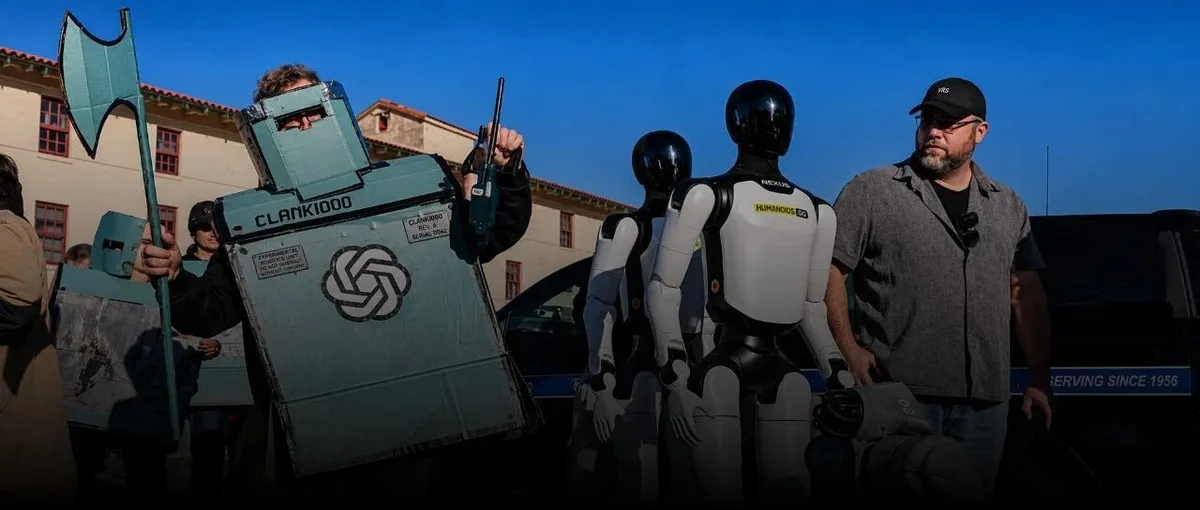
Update · : The reorganization was confirmed on the occasion of the CoRL robotics conference in Austin, where OpenAI had booked a booth (No. 208) that stood empty, with no company logo displayed. OpenAI reiterated that robotics remains a core part of its long-term vision and that the change does not mean exiting the field.
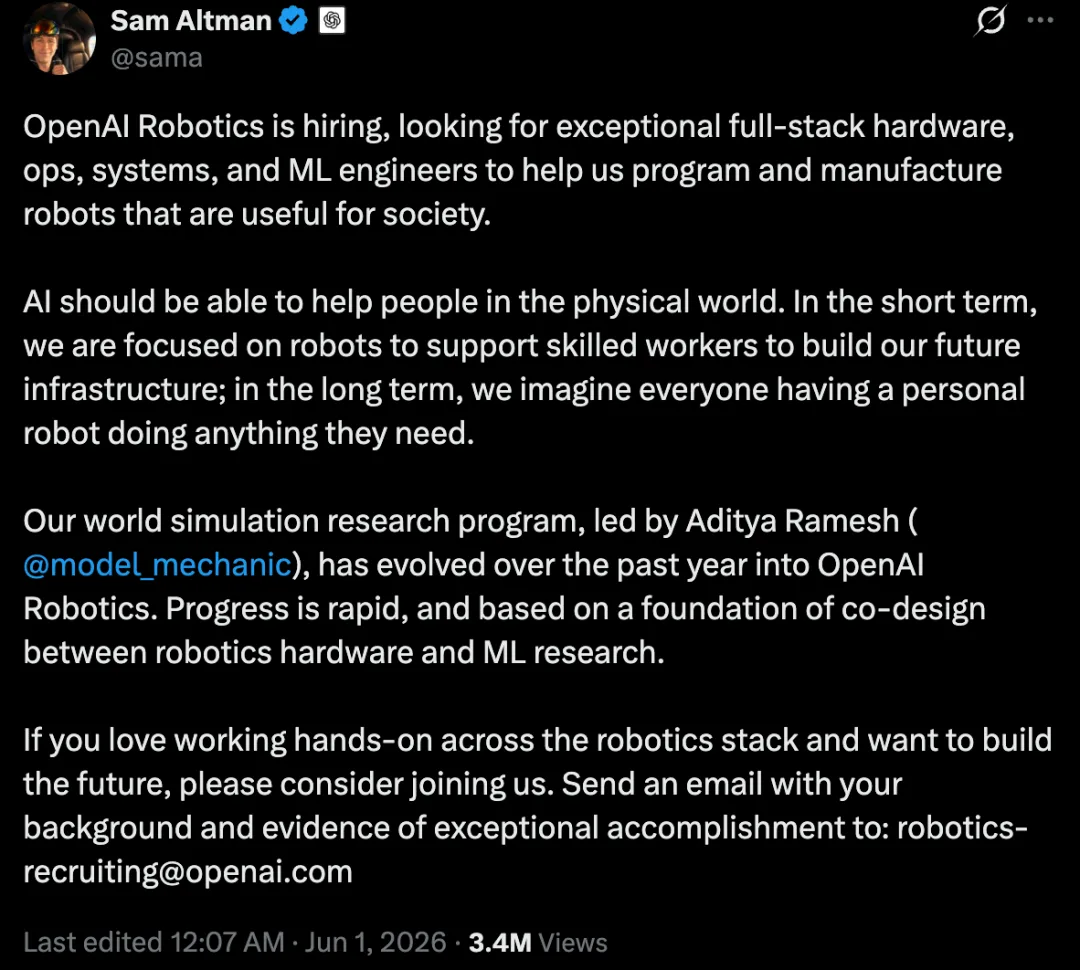
OpenAI has disbanded its stand-alone robotics team and moved its researchers to other teams, the company confirmed to Fortune. The robotics research team now reports to Chief Research Officer Mark Chen, while the applied robotics and hardware teams joined the Applied organization, which reports to President Greg Brockman. A company spokesperson said robotics remains a core part of OpenAI's long-term vision.
OpenAI wound down its robotics team in 2020, rebuilt one in 2024 through a partnership with Figure, and saw that partnership end in February 2025. The company says it is developing its own humanoid robot, and CEO Sam Altman is targeting a first public demonstration in 2027. The reorganization reflects a bet that general models such as GPT-6 Astra can also control robots, an approach known as embodied AI[1], where AI models control devices that act in the physical world.
In an Nvidia study, an Astra-powered agent reached a 74.8% success rate on a simulated manipulation benchmark, against 51.0% for the best specialized robotic models on that leaderboard. Russ Tedrake, an MIT professor and CEO of Walden Robotics, argues that robotics firms still have an advantage: their robots already gain deployment experience on factory floors[2], which helps them adapt to specific workplaces. The article also notes that OpenAI is under pressure to cut costs, with reported operating losses of $10.9 billion in the most recent quarter.
Read the original finance.sina.com.cnDiscussion
Discussion
Most commenters doubt that general cloud-based models are a good fit for robot control, calling them slow, token-hungry and dependent on a constant connection. Several suggest layered systems, where fast simple models handle low-level control and slower models handle planning. Others read the move as cost cutting before an IPO, while one points to The Bitter Lesson as the general principle behind the shift.
Sources
-
Fortune
OpenAI disbands its stand-alone robotics team as its general-purpose AI models start running robots
-
CNSina Tech ZH new source ·
突发|OpenAI解散独立机器人团队
-
CNSina Tech ZH new source ·
突发|OpenAI解散独立机器人团队


