oMLX: LLM inference server for Apple Silicon Macs, managed from the menu bar
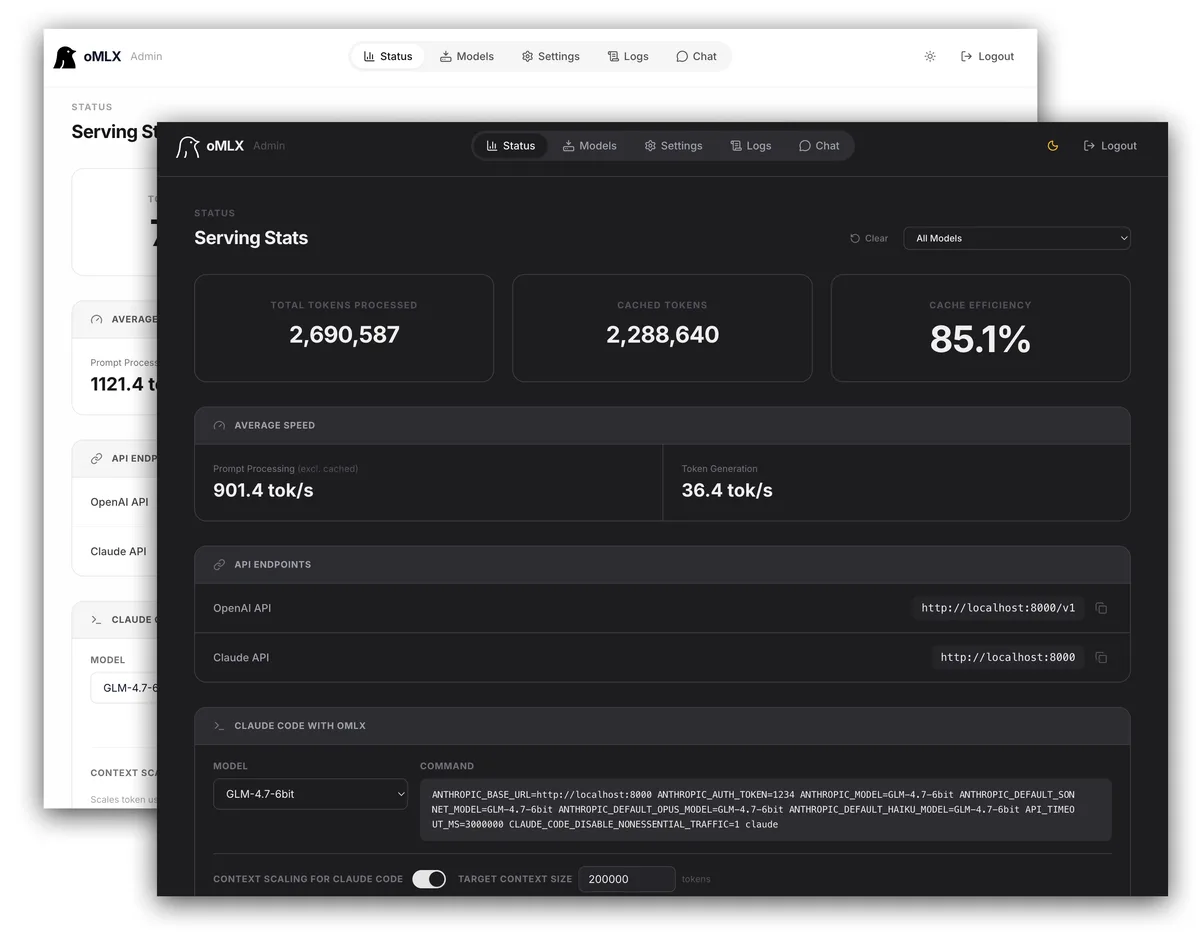

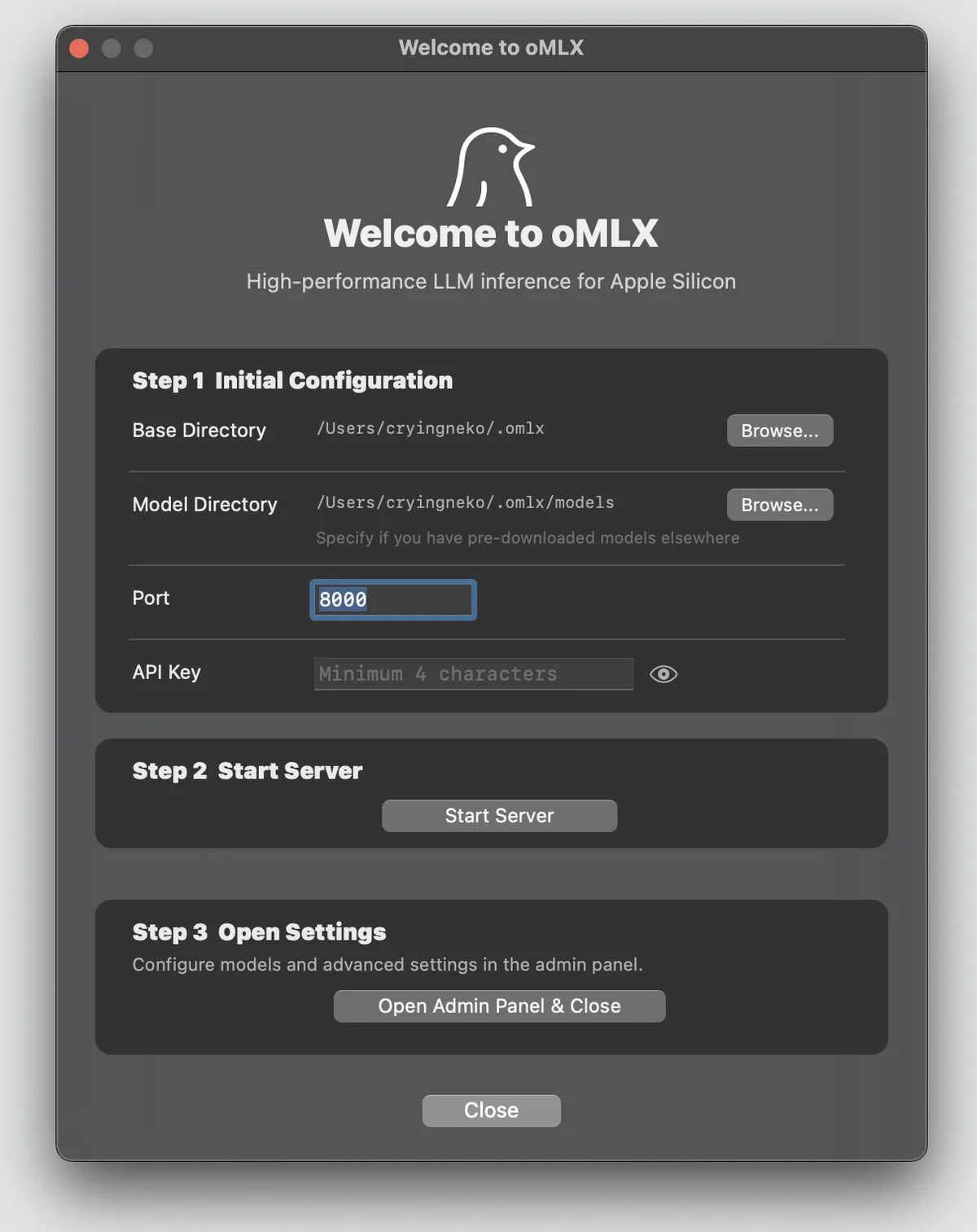
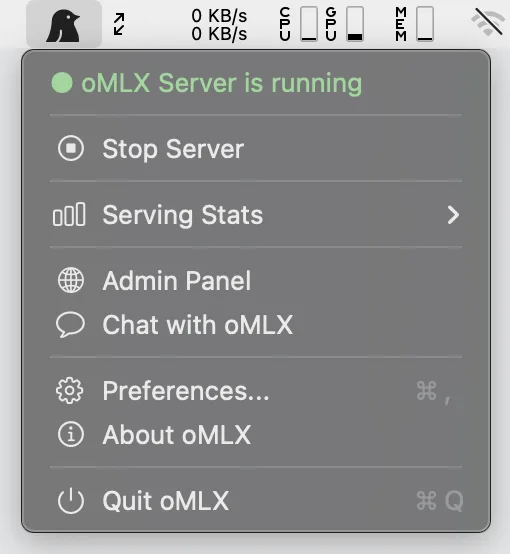
oMLX is an LLM inference server for Macs with Apple Silicon, managed from a menu bar app on macOS. It uses continuous batching[2] and a two-tier KV cache[1], with a hot tier in RAM and a cold tier on SSD. Cached blocks are restored from disk on the next request with a matching prefix, even after a server restart. The app is installed from a .dmg on the Releases page or with Homebrew, and it requires macOS 15.0+ (Sequoia), Python 3.11–3.13 and Apple Silicon.
The server works with text LLMs, vision-language models, OCR models, embeddings and rerankers, and exposes an OpenAI-compatible endpoint at https://newscrawler.org/v1. Models can be pinned, unloaded after a per-model idle timeout, and evicted by LRU eviction[3] when memory runs low. GLM-5.2, MiniMax M3 and Qwen3.5 need native custom kernels; for GLM-5.2, the fused DSA prefill is roughly 30x faster with them (845 vs ~29 tok/s on an M3 Ultra).
Building the kernels with make install requires full Xcode with the Metal toolchain. Without it, the README suggests make install-no-kernels or the official DMG, which ships the kernels precompiled. For Claude Code, the server reports the model's real context window so that auto-compact works with smaller context models, and MCP support is optional.
Repository oMLX github.com
LLM inference server for Apple Silicon Macs, managed from the macOS menu bar, with an OpenAI-compatible endpoint and SSD-based KV caching.
Discussion
Commenters focus on quantization formats rather than on oMLX itself. One says Unsloth kept upstream NVFP4 experts in its Q4_K quants, which runs poorly on Mac, so they switched to GGML quants. Another notes that quant names no longer say much about the format, and a third says llama.cpp seems to want to allocate 26 G.
Links from the post and discussion
Sources
-
github.com
GitHub - jundot/omlx: LLM inference server with continuous batching & SSD caching for Apple Silicon — managed from the macOS menu bar




 archive