NVIDIA Announces Rubin HPC, a New GPU for Science and Engineering Simulation
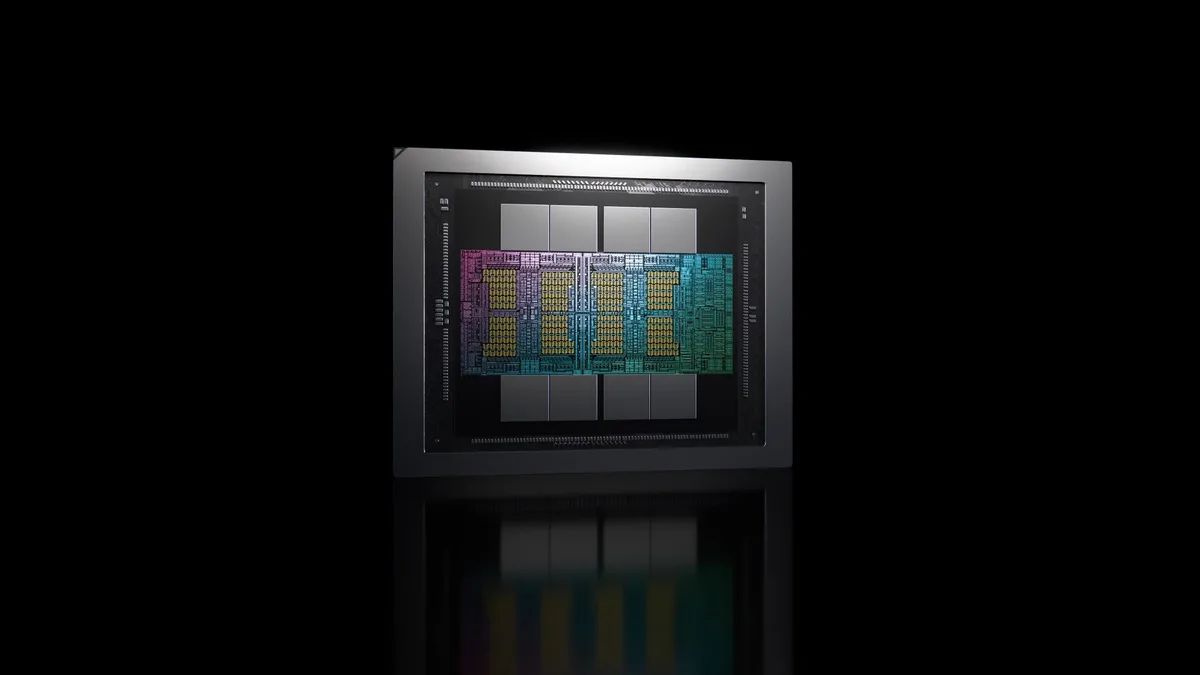
NVIDIA announced Rubin HPC today at SC26, on 17 November. It is a new GPU in the Vera Rubin platform, built for simulation and data processing in science, engineering and analytics, the kind of work known as HPC[1]. The company says that agents help scientists and engineers explore more candidate materials, molecules and designs, and that these ideas need simulations to test them.
NVIDIA says Rubin HPC has a record number of CUDA cores[2], more than 50,000 on a single GPU. The GPU adds sparse data acceleration to keep those cores supplied with data, and it uses seventh-generation NVLink[3] for GPU-to-GPU connectivity. The design scales data movement and compute together rather than compute alone.
Ian Buck, vice president of hyperscale and high-performance computing at NVIDIA, said that faster simulation means faster discovery. NVIDIA CUDA-X libraries offer optimized algorithms that agents can use with Rubin HPC. Rubin HPC is expected to be available in 2028.
NVIDIA shares (NVDA)
125.53 USD −19.3% since the news day, November 17
Close on November 20 Quotes: CNBC Chart by TradingView
Read the original blogs.nvidia.comDiscussion
Discussion
Commenters are mostly skeptical that the agent angle is more than marketing, and several note the 2028 availability date. One HPC user welcomes a return to focus on FP64 precision, while another cites a core count of 25,000+ and guesses at a future consumer card.
Sources
-
NVIDIA Blog
NVIDIA Announces Rubin HPC — A New GPU to Accelerate Agents for Science, Engineering and Analytics