Notes on the decline of LessWrong's great writers
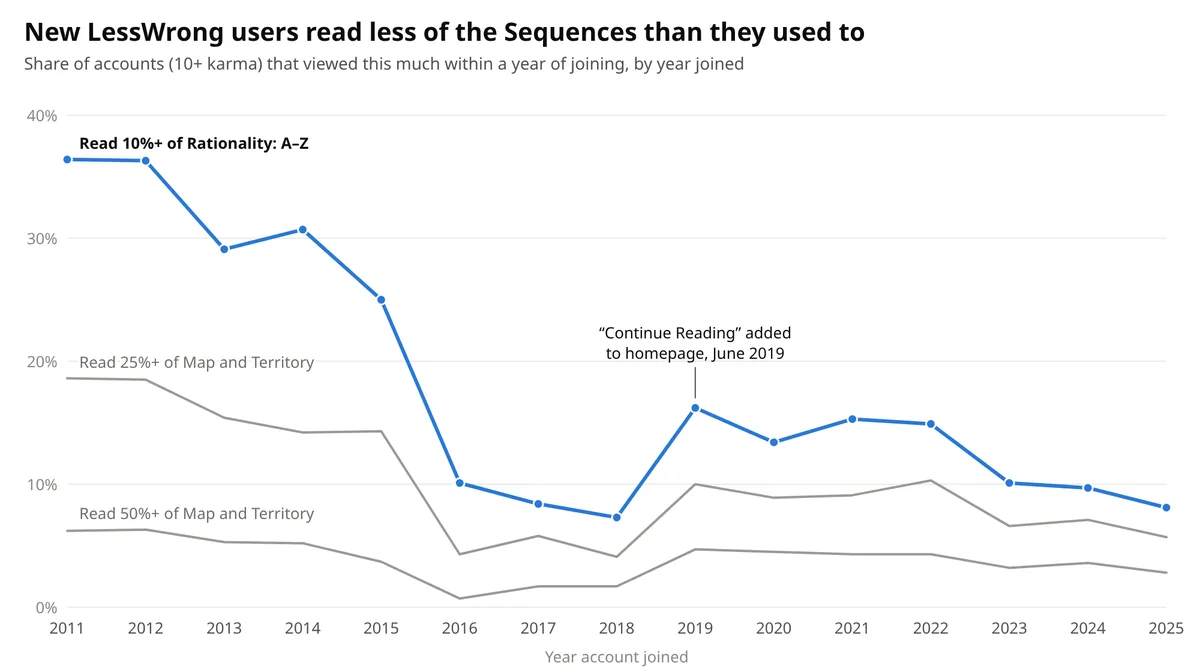
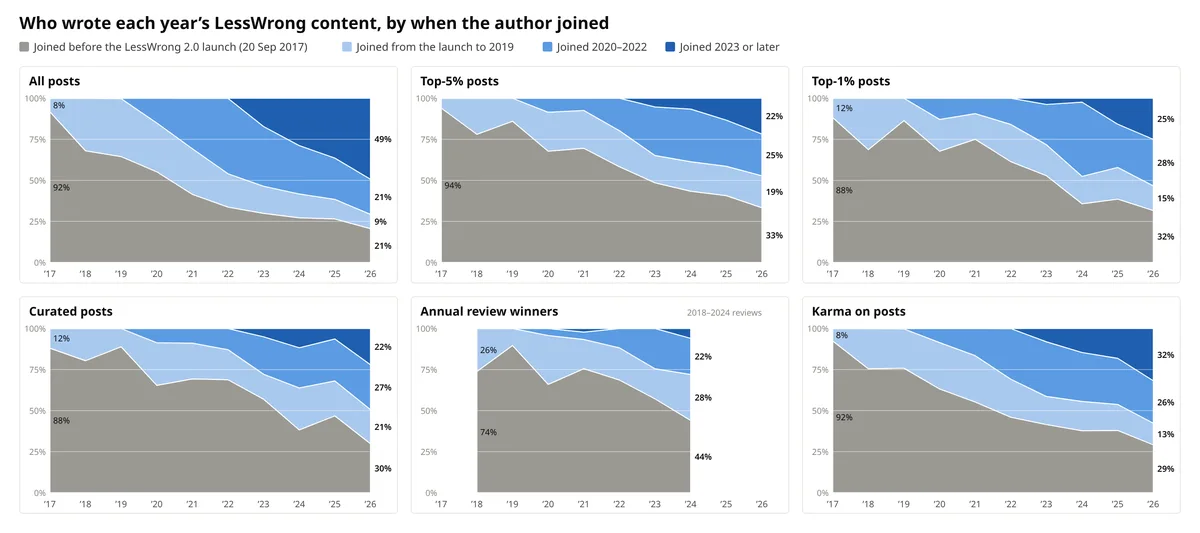
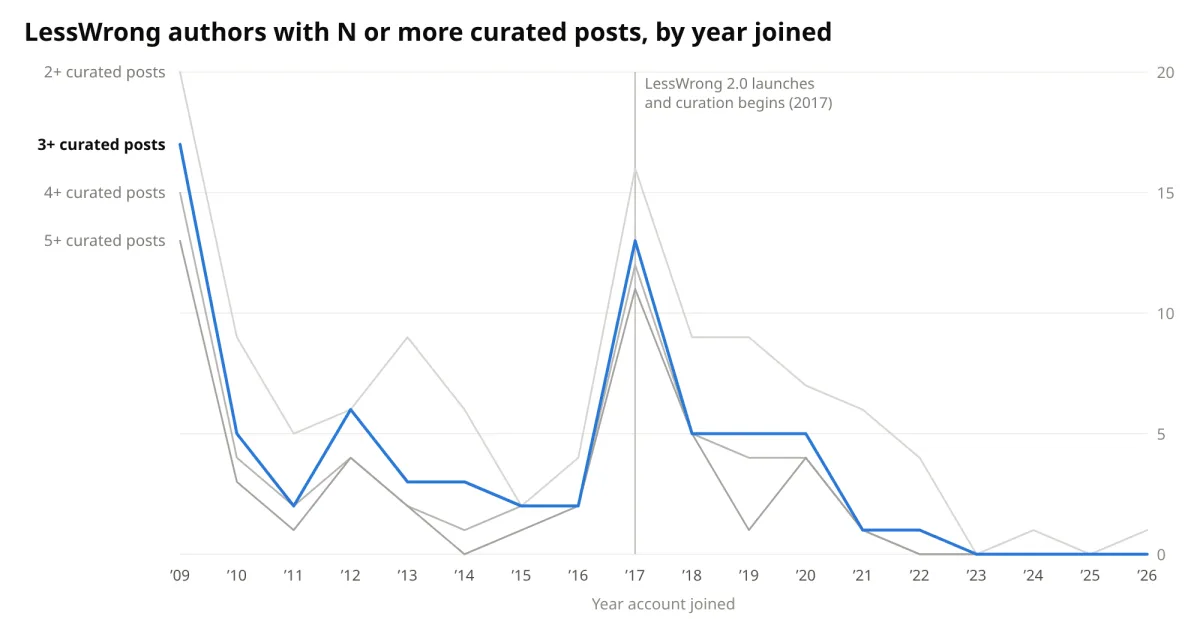
Update · : A reply to Ben Pace's post argues the decline is not clear: it notes the curation graph shows spikes at the 2009 LW 1.0 launch (including posts imported from Overcoming Bias) and the 2017 LW 2.0 launch, and says curation spots did not grow while users and posts did, so newcomers face more competition. It says the old guard still writes about a fifth of all posts and a third of the top ones, and that new authors keep reaching the top 5% of posts (at least 150 karma in 2026, versus 60 karma in 2011).
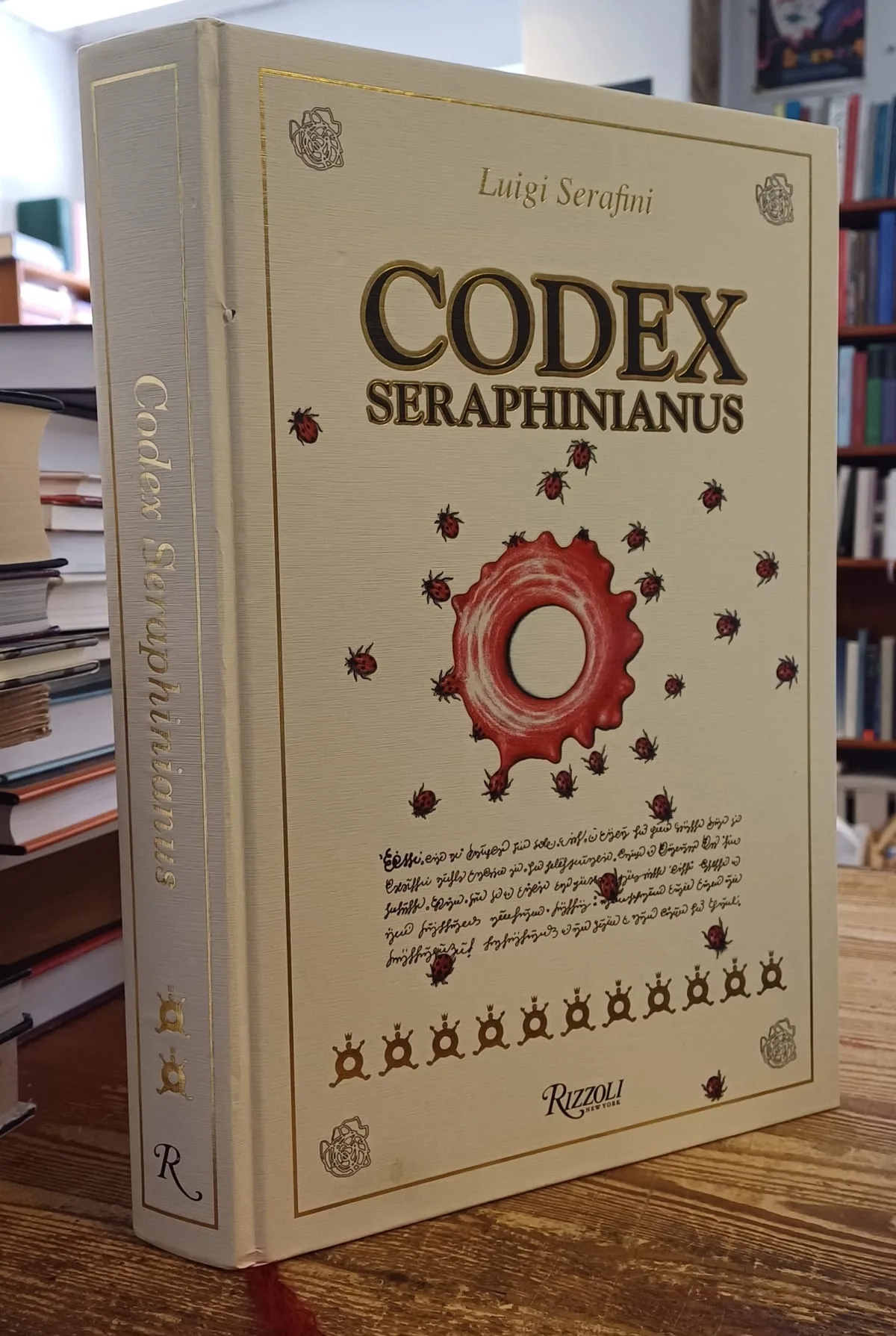
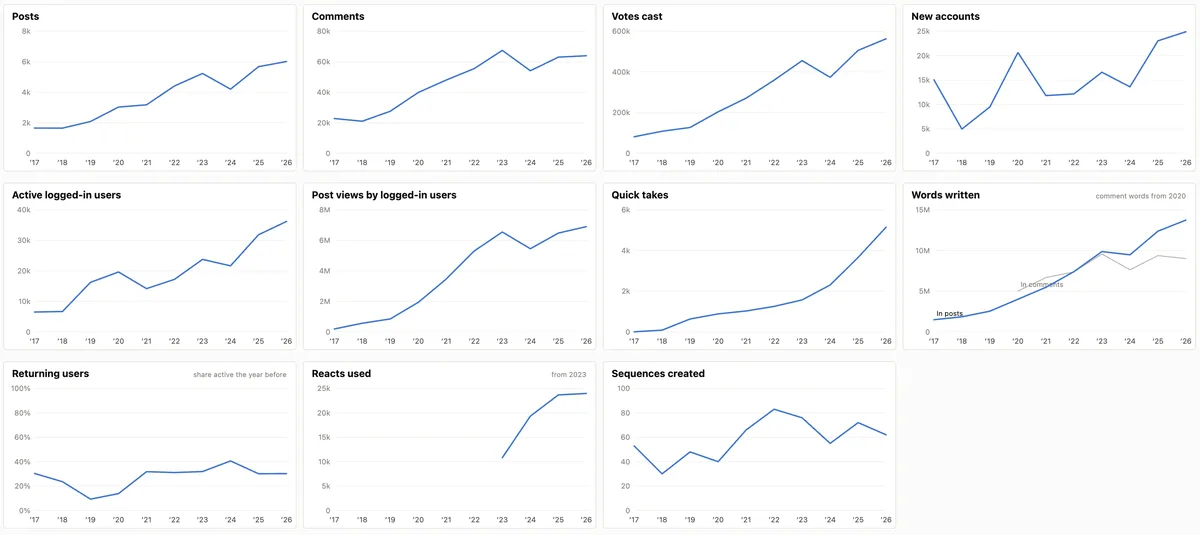
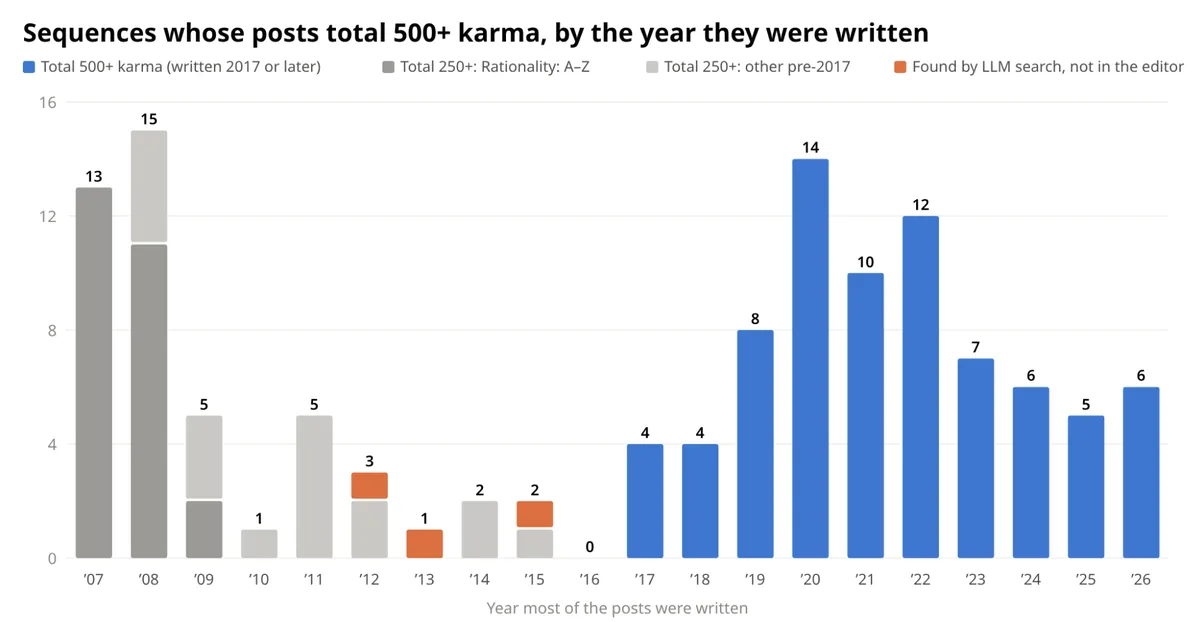
The author of this LessWrong post says the site had strong writers in its early years, and that Eliezer wrote some of the Sequences[1], a long philosophical work. After the 2017 relaunch, many known writers returned, and the author calls the relaunch very successful. Still, the author says the number of great writers who make LessWrong their home has fallen, even though posts, comments and users have grown.
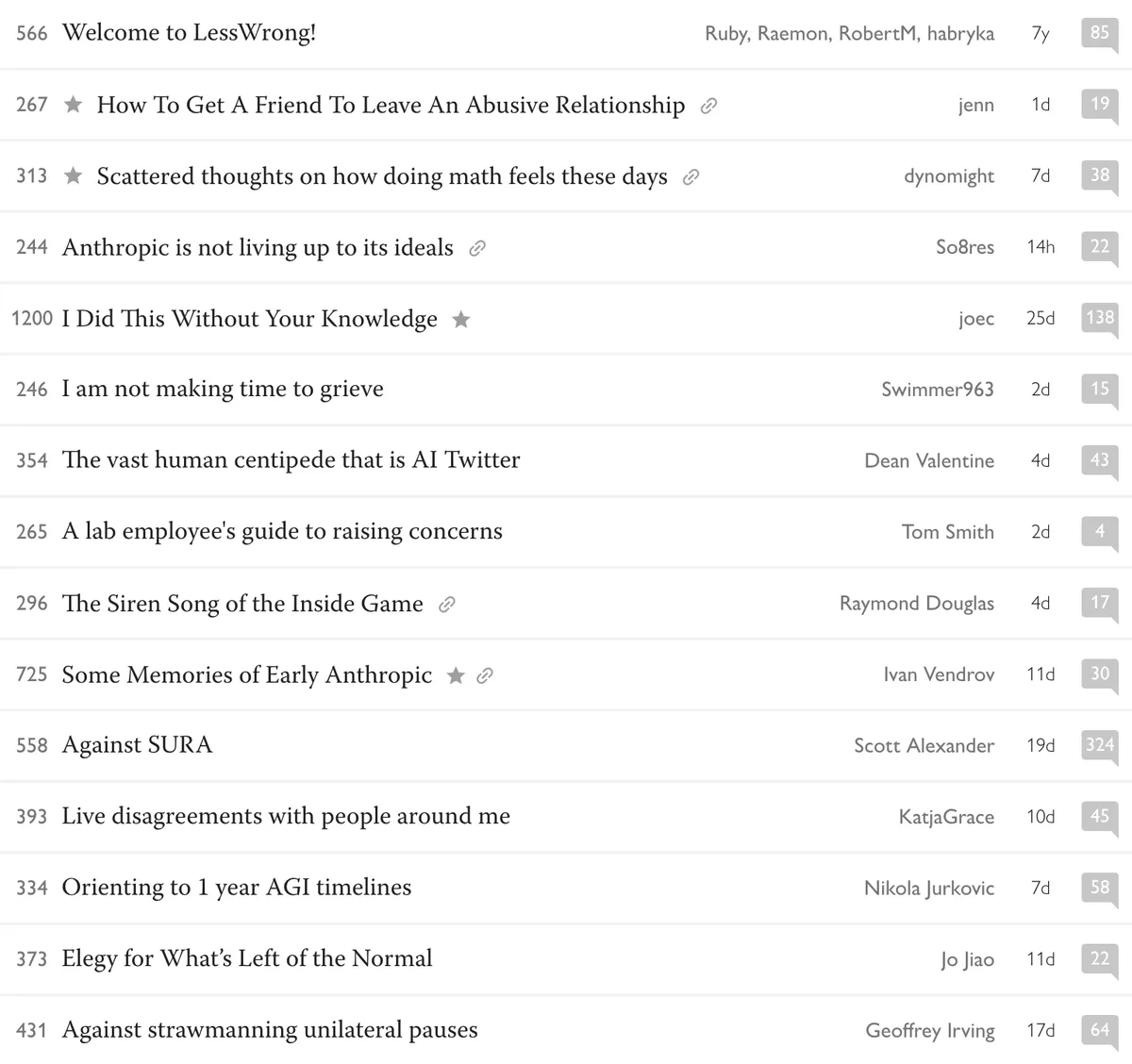
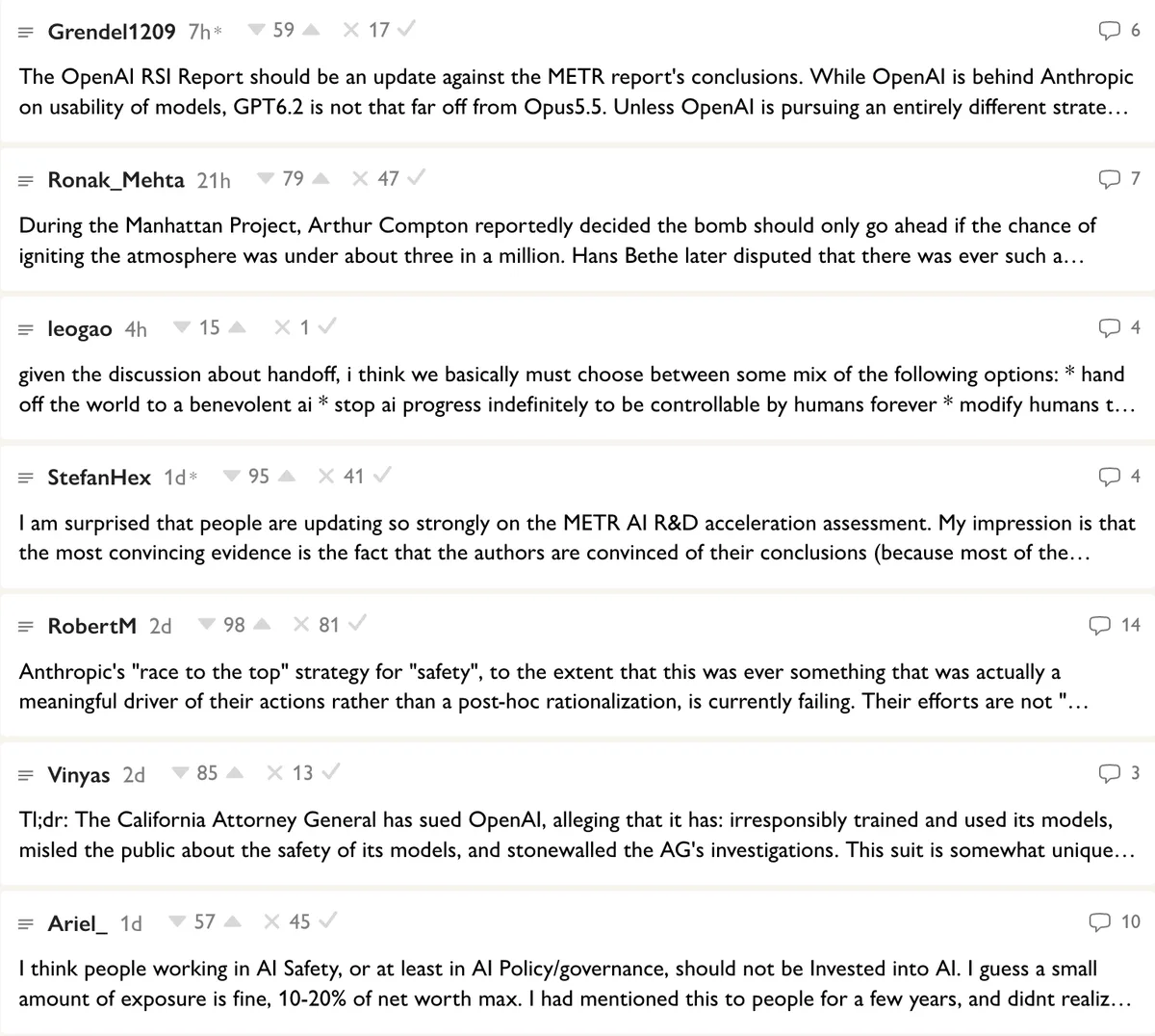
The author gives three possible reasons. First, no big new project has revived the original mission; the author considers a book of The Sequences and a LessWrong conference. Second, newcomers mostly come for AI content: for logged-out users, nearly all homepage posts are about AI, and the author says many visitors are referred by ChatGPT. Quick Takes[2] are also mostly about AI.
Third, Substack gives writers their own audience and direct income, which LessWrong does not, and the author says Scott Alexander earns a large sum there. The author notes that the metrics are still rising and asks for other hypotheses and proposed solutions.
Repository LessWrong github.com
Open-source codebase of the Less Wrong platform, a community forum for rationality and philosophy discussion.
Read the original lesswrong.com
Discussion
Most commenters agree that the surge of AI discussion and the loss of a shared mission explain the decline. Several say many Sequences articles rest on outdated or non-replicable science, which makes a printed edition hard to justify. One commenter argues that the site's current feed has little room for high-concept rationality writing.