Most Americans are more negative than positive about AI, five surveys show
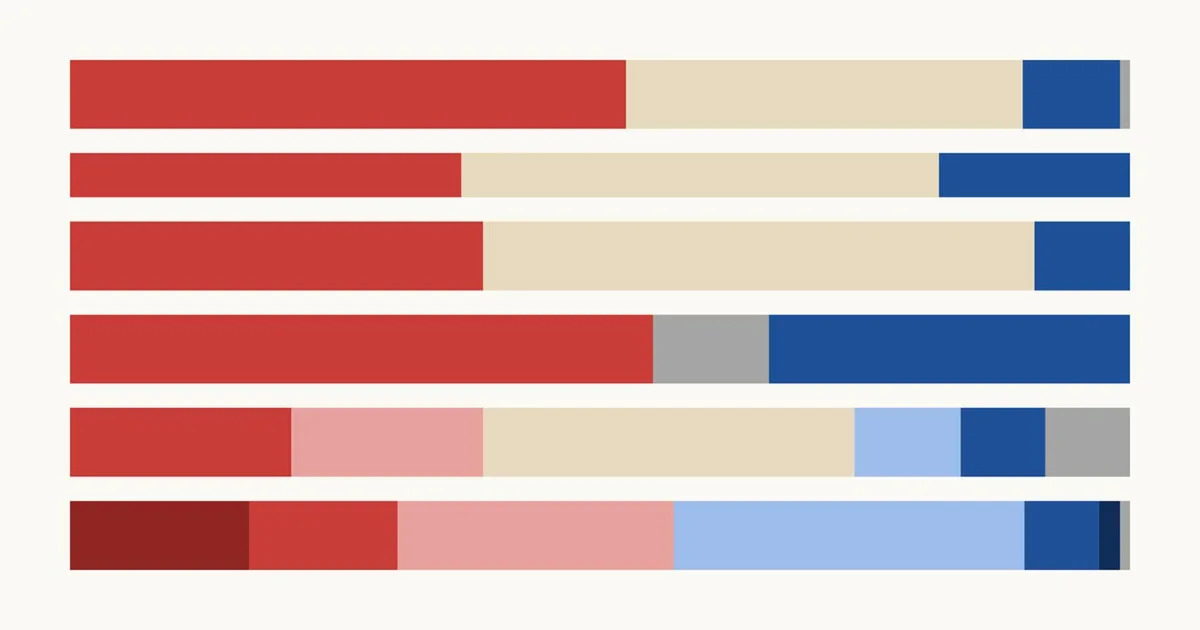
Max Roser of Our World in Data reviews five recent high-quality US surveys on how Americans feel about AI. He included only surveys based on probability samples[1] and excluded opt-in online polls. Question wording changes the results: when a middle answer is offered, 37% in Pew's recent survey chose it, and only 9% in both Pew's and Gallup's surveys chose a positive view.
Every survey finds more Americans negative than positive about AI. In Pew's survey, 52% are 'more concerned than excited' and 9% are 'more excited than concerned', a ratio of more than five to one; when Pew first asked in 2021, the ratio was about two to one. In the Ipsos survey, 17% called AI an 'extremely bad' thing for society and 2% called it 'extremely good'.
Concern extends to extreme risks: in a Quinnipiac poll in September 2026, 73% said there is a risk that AI could threaten the survival of humanity. The gap also appears across parties, with 56% of Democrats and 49% of Republicans more concerned than excited in Pew's survey. The author concludes that the industry will have to take these concerns much more seriously to earn public trust.
Read the original ourworldindata.orgDiscussion
Discussion
Commenters mostly say the negative views reflect the current state of the US, distrust of AI companies, and the lack of clear personal benefits so far. Some argue that the sampling method skews results, and one commenter argues the issue is how AI's benefits are distributed rather than AI itself.
Links from the post and discussion
Sources
-
Our World in Data
No matter how you ask, more Americans are negative than positive about AI


 archive