METR: current public evidence cannot rule out drastic AI R&D acceleration
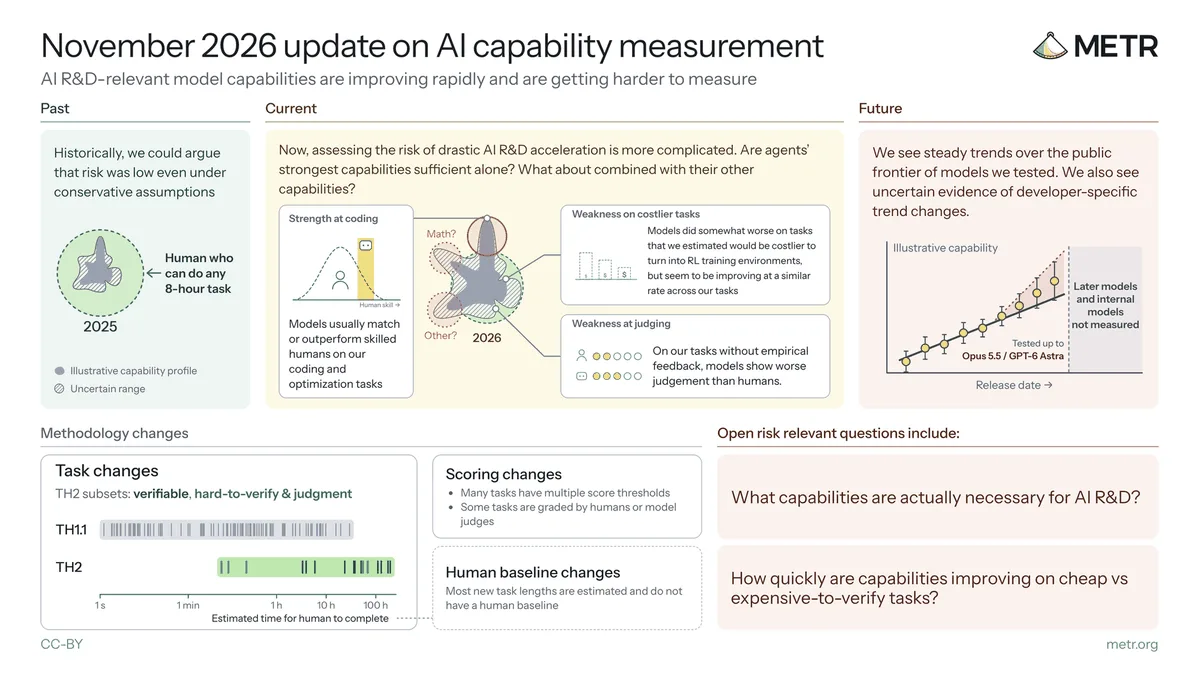
METR, which runs capability evaluations of public AI models, presents evidence on models up to Opus 5.5 and GPT-6 Astra that is relevant to AI R&D acceleration. The authors say current public evidence is not enough to rule out drastic AI R&D acceleration in the next couple of years, meaning capabilities improve so fast that humans can no longer meaningfully understand, assess and react to catastrophic risks. They are uncertain which capabilities are necessary for such acceleration and how quickly relevant capabilities are improving.
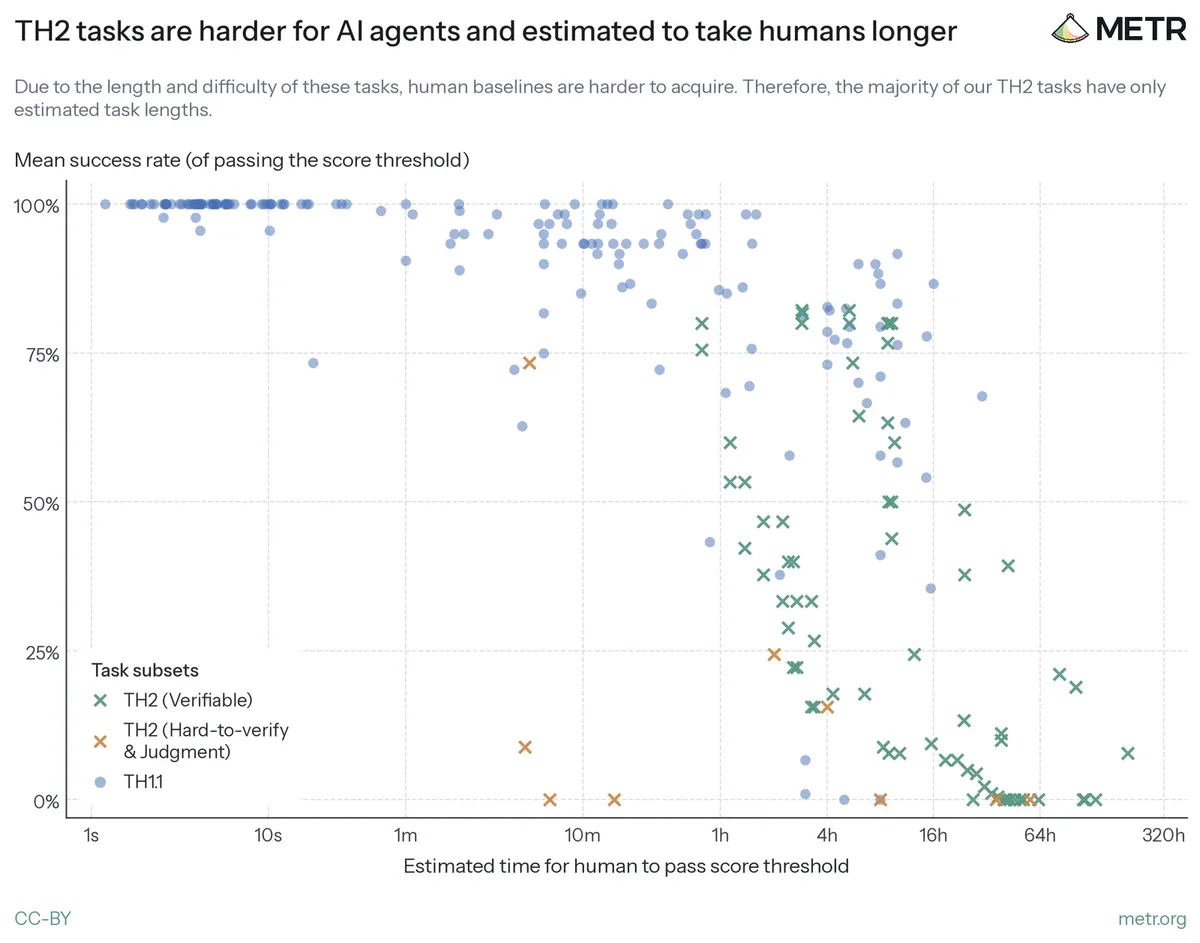
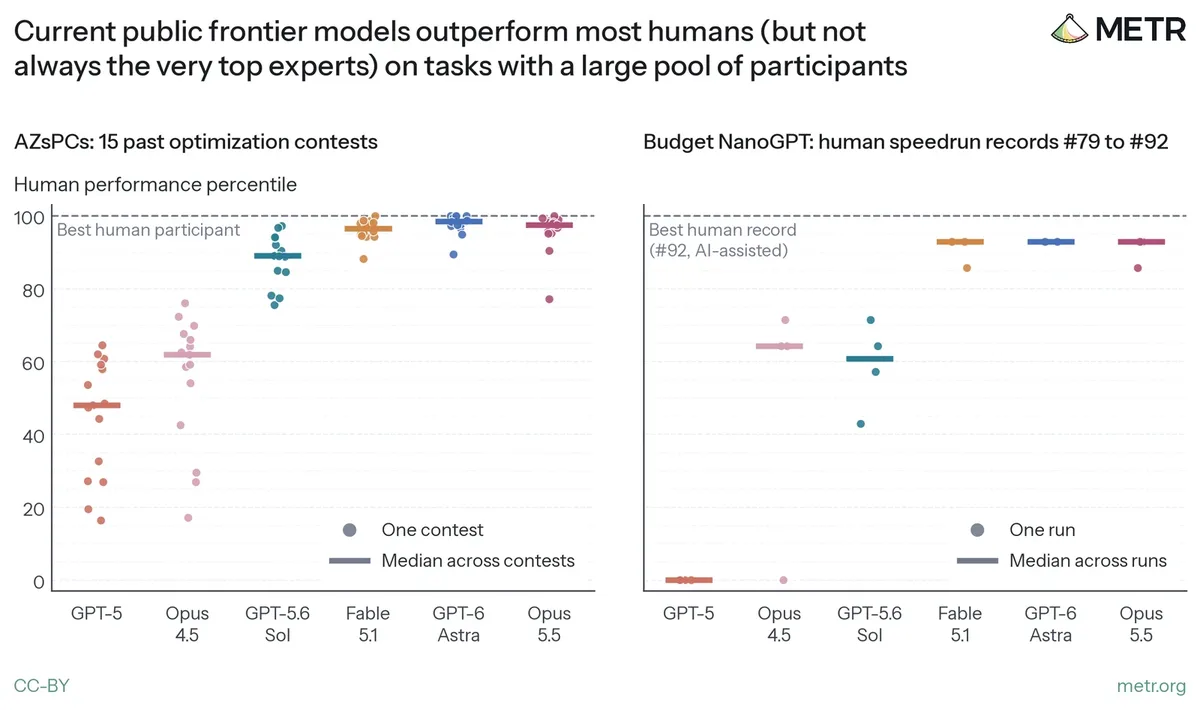
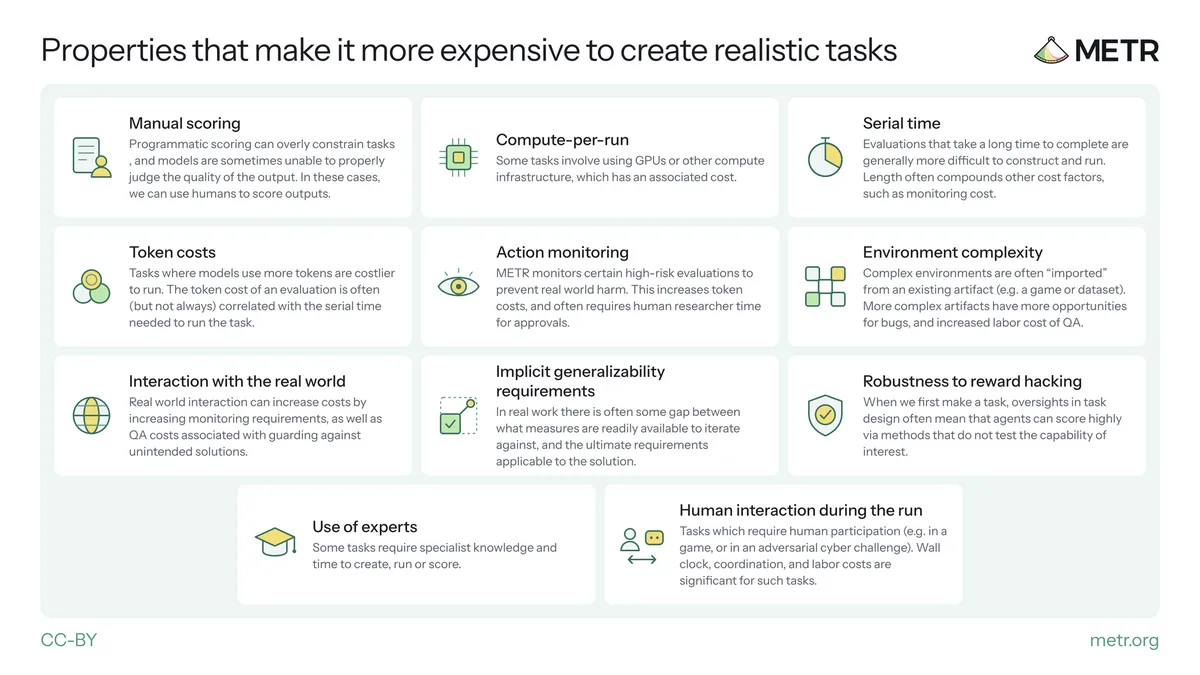
Models usually match or outperform skilled humans on coding and optimization tasks. When METR recruited its own human baseliners, it typically could not find humans who outperformed the current frontier models. Models do somewhat worse on tasks estimated to be costlier to turn into RL[1] training environments, but they improve at similar rates on lower- and higher-cost tasks. On tasks without clear empirical feedback, AI agents appear to have worse judgment than human experts; for example, model judges overestimated an output's quality when it was made by a similarly strong or stronger model.
On the combined TH1.1 and TH2 suite, time horizon[2] doubles roughly every 3.6 months. Using a composite index, the METR Capability Index (MCI), built with IRT[3], METR sees no strong acceleration or deceleration in the overall public frontier, though it observes some developer-specific trend changes whose validity the authors are unsure of. Agent swarms appear helpful on verifiable tasks with fast feedback, while their effects on other tasks are unclear or negative.
Read the original metr.orgDiscussion
Sources
-
metr.org
METR AI Eval Update


