Kimi K3.1 Pro: a 3T-class open-weight model with a 1M-token context window


What happened next
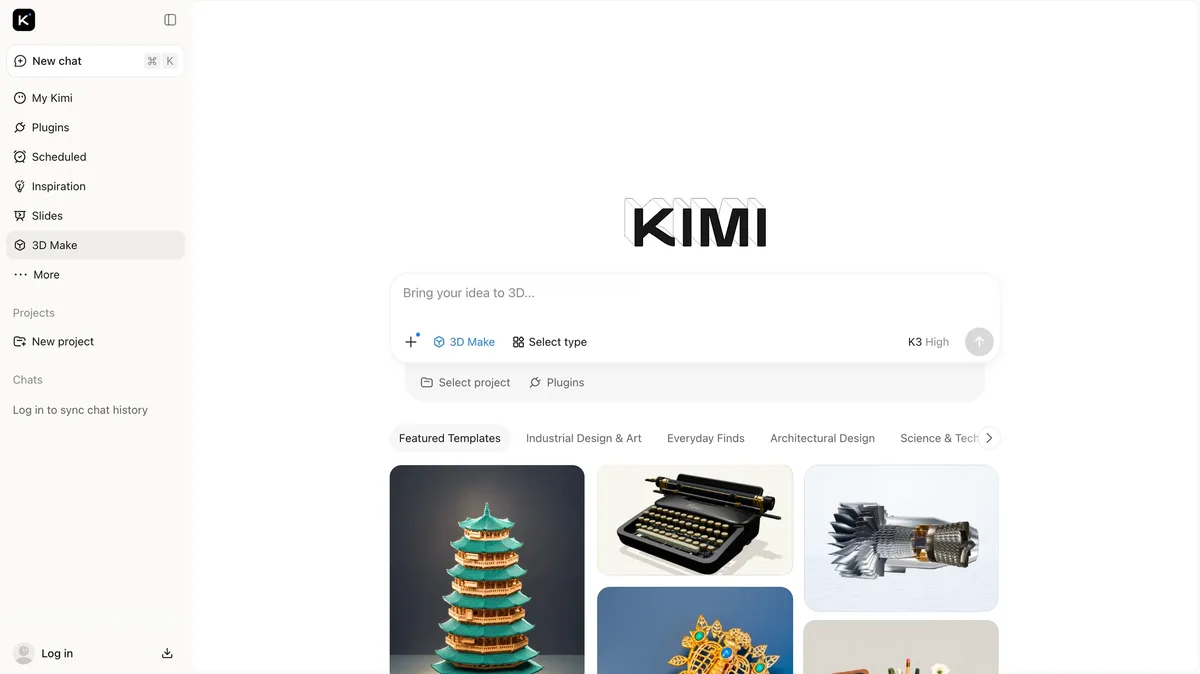
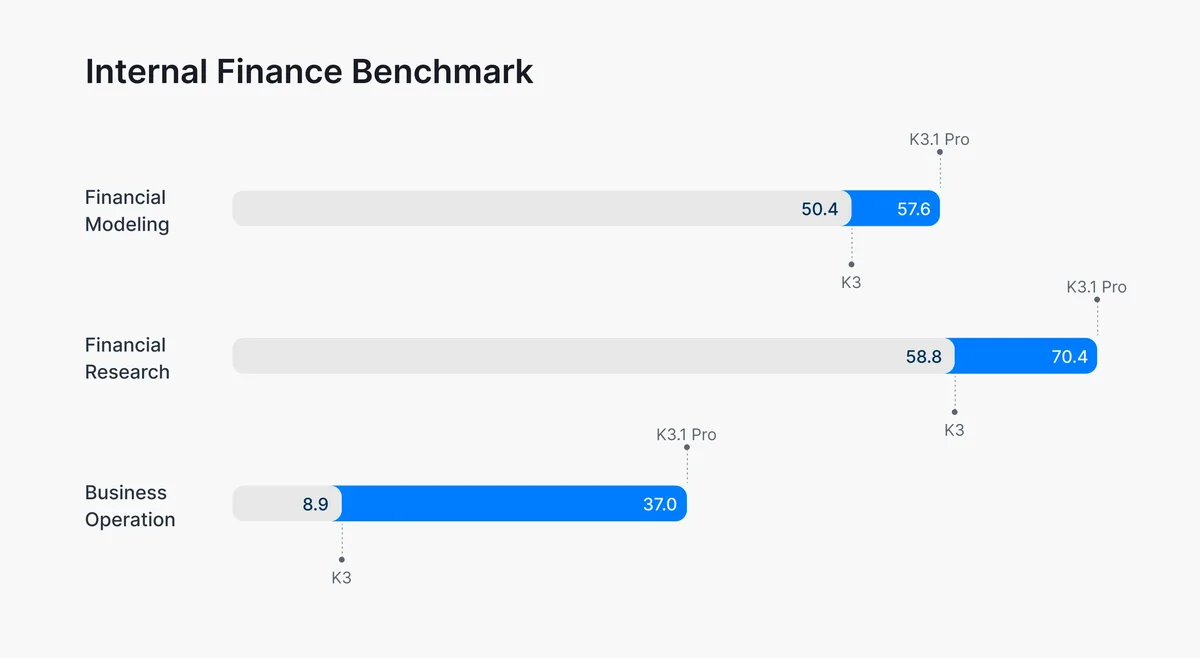
Moonshot introduced Kimi K3.1 Pro, the first model in its K3.1 series and the company's most capable 3T-class open-weight model[1] to date, with a 1-million-token context window[2], along with a Highspeed variant that runs 2-3× faster. The company reports substantial gains in coding, 3D creation, and financial research: the model matches or approaches the strongest proprietary models on coding, agentic, and knowledge benchmarks, scoring 65.7% on Terminal-Bench 4.0, ahead of GPT-6 Astra (58.2%) and just behind Claude Opus 5.5 (66.4%). For the open-weight release, cyber-related data was removed from mid-training and reinforcement learning[3] stages, which lowered the score on the internal vulnerability-research benchmark xdev-bench-hard from 90.5% to 81.0% at pass@3[4], though the final model still improves substantially on its predecessor. On the factual-accuracy stress test Kimi Hallu Bench Hard, the claim-level hallucination rate fell from 23.4% for K3 to 8.3% on examples deliberately crafted to provoke errors. The models are available today on Kimi.ai, Kimi Work, Kimi Code, and the Kimi API, with the full weights to be released by Nov 4, 2026.
Read the original kimi.aiDiscussion
Discussion
Commenters are sharing third-party numbers: Artificial Analysis ranks the model fourth overall, ahead of GPT-6 Astra, and one user's Pac-Man benchmark shows it tying Claude Sonnet 5.5 at under half the cost. Several question what removing cyber-related data means, arguing that general knowledge of how computer systems work is enough to derive exploits anyway; others note the model sometimes identifies itself as ChatGPT in its reasoning, and one post links documents said to show Moonshot recruiting paid promoters. One commenter takes the rankings to mean China is now weeks rather than months behind the US frontier, while a subscriber warns the 5-hour usage limit makes the service unusable.
Sources
-
kimi.ai
Kimi K3.1 Pro and K3.1 Pro Highspeed
-
KRGeekNews KO
Kimi K3.1 Pro 공개 - 코딩과 3D 제작을 강화한 100만 토큰 컨텍스트의 3T급 모델


