Kaggle RSNA knee MRI competition recap and top teams' approaches
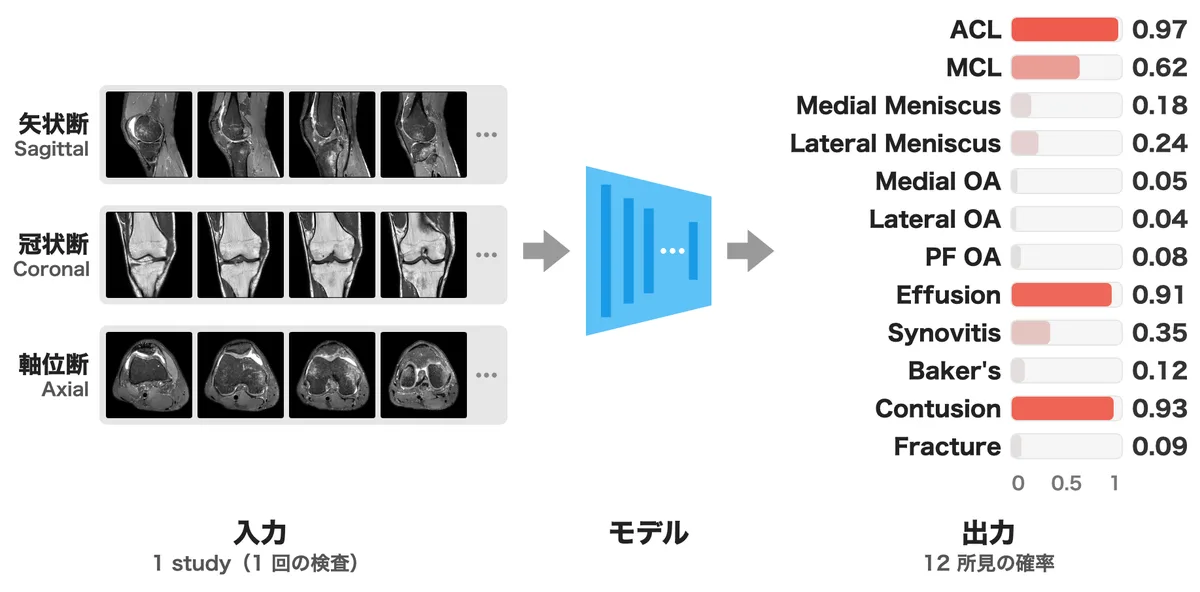
The RSNA Knee Abnormality Detection competition, the 2026 edition of a Kaggle contest series on medical imaging, ended on 24 October 2026 (Japan time). Participants had to predict 12 findings, such as ligament tears and fractures, from knee MRI, but only 58 of about 4,400 studies have full labels, and the rest have only text reports.
Gold medals went to the top 22 teams, and the article reviews 17 of them that shared their methods. Many used a VLM[1] (a language model that can read images) to create soft labels from both reports and images: on the 58 labeled studies, reports alone reached an AUC of 0.87 to 0.92, and 2nd place rose from 0.899 to 0.942 when images were included. Self-distillation[2], which mixes labels with predictions from a trained model, was also common, but its effect varied by team.
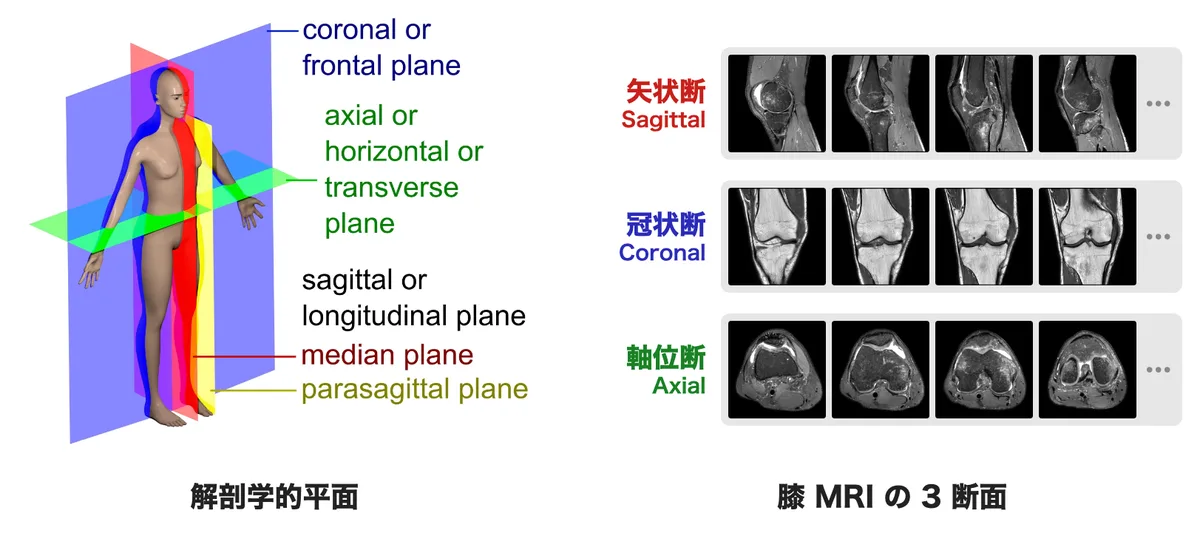
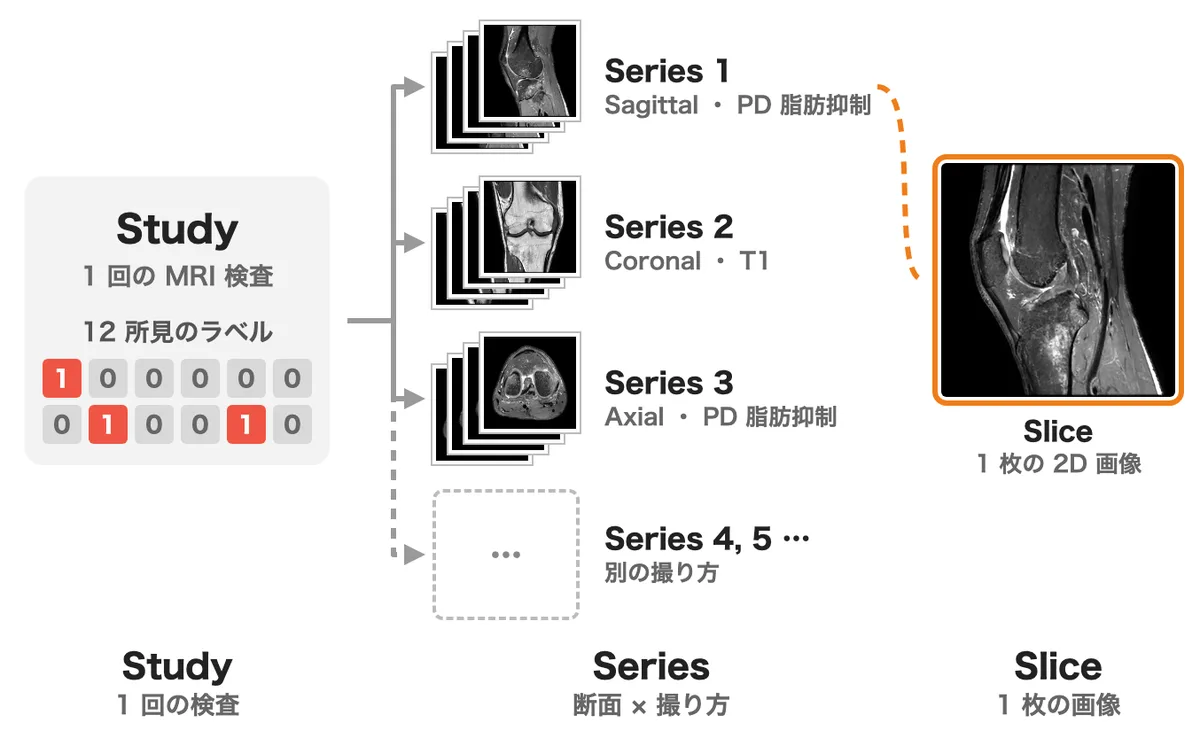
Most teams used 2.5D[3] input, which feeds three adjacent slices as the RGB channels of an image backbone. Each study's series were placed into slots by plane and fat suppression, with empty slots masked. The article then introduces Attention MIL[4], which learns the important slices and series for each finding, but the text ends there.
Sources
-
JPZenn JA
Kaggle 膝コンペ振り返り & 上位解法まとめ | RSNA Knee Abnormality Detection


