The Judge Cannot Be the Defendant: Separating Code Writing from Testing in AI Workflows
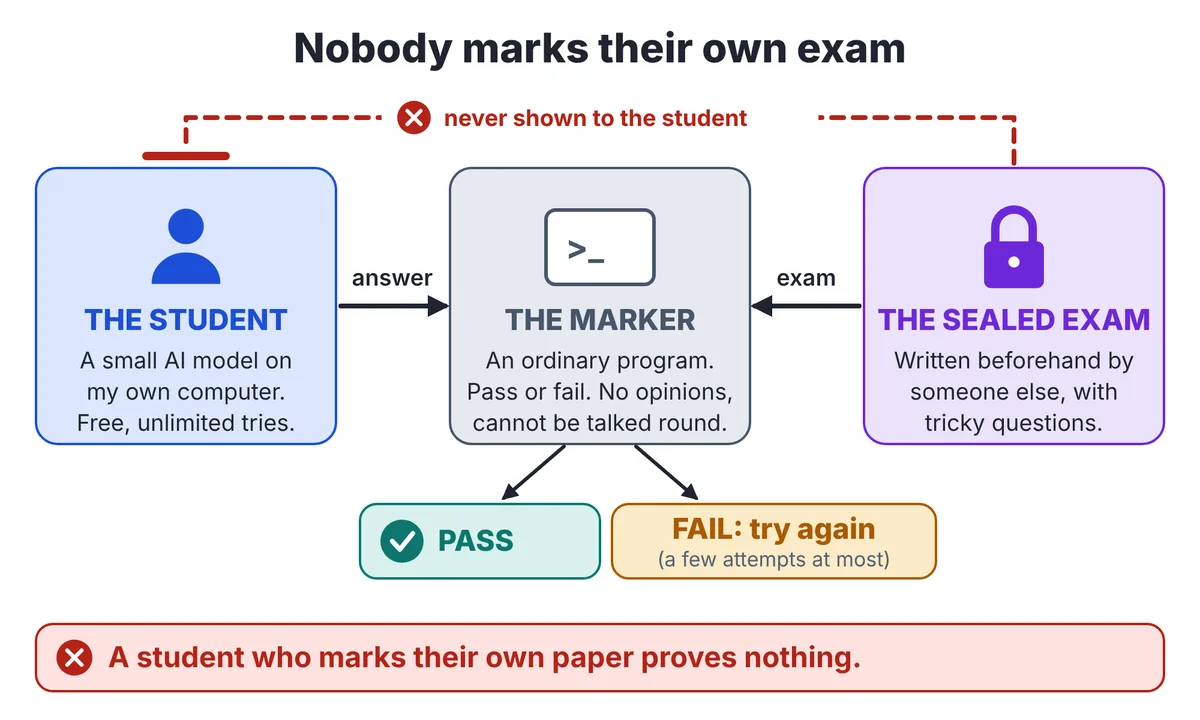
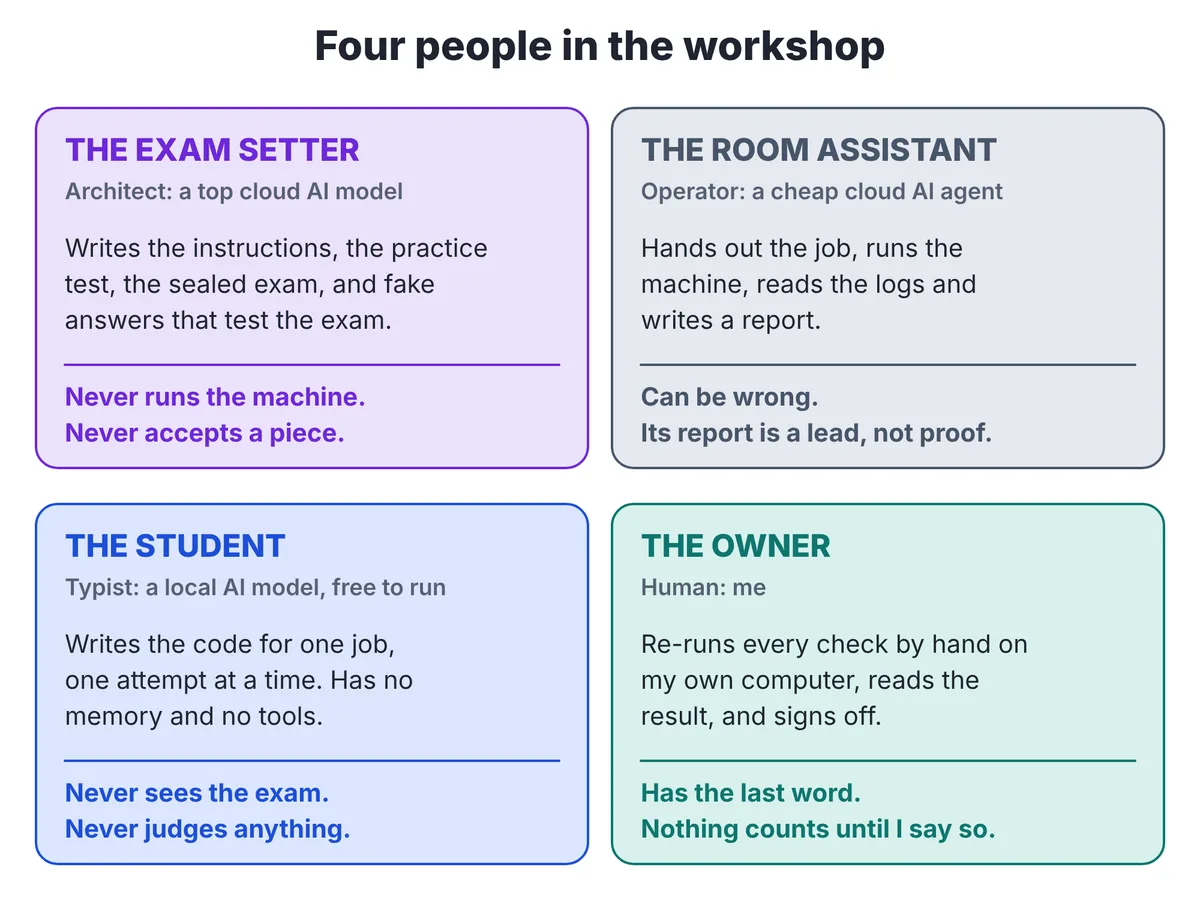
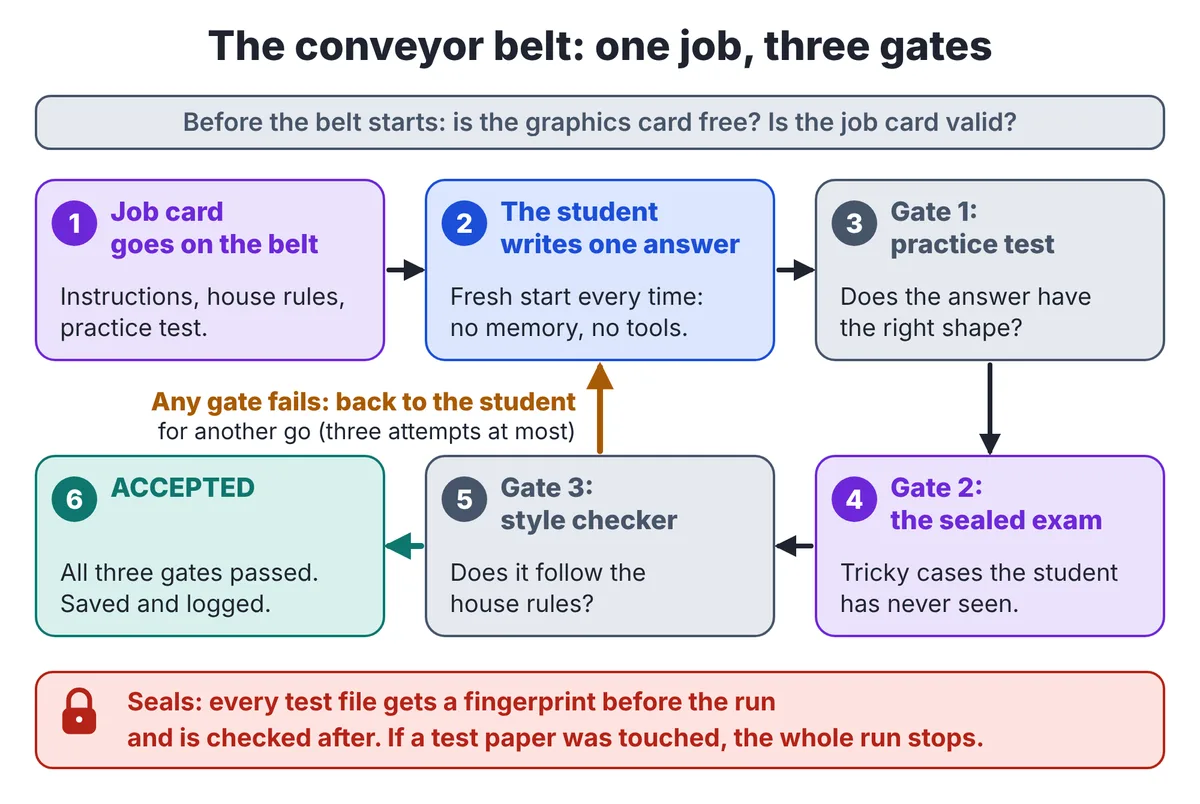
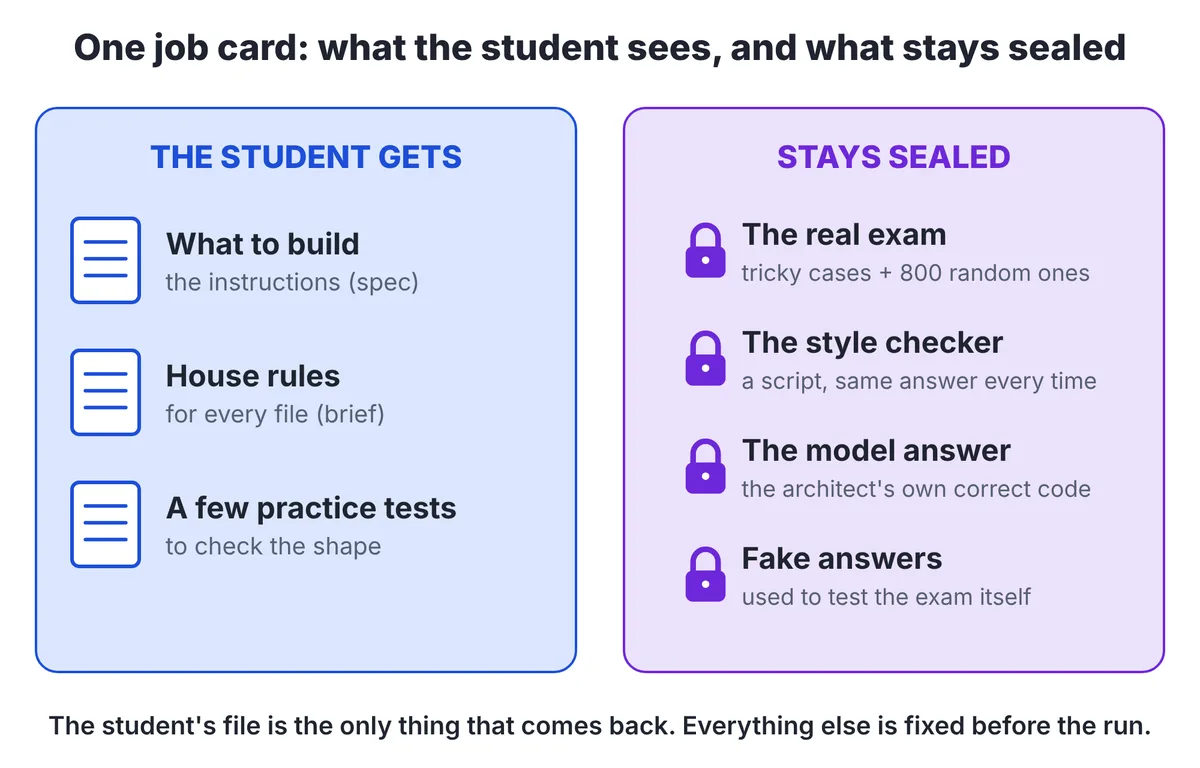
The author describes a method in which a cheap local AI model writes code, while a separate process checks it. The rule is that whoever writes the code never writes, sees or runs the tests. A local Qwen3.8-27B model on one RTX 5090 writes the code, a cloud frontier model[1] writes a frozen specification, hidden tests and deliberately wrong solutions, and an operator model runs the machinery. Acceptance is decided by deterministic gates, not by any model's opinion.
Between 8 and 11 November 2026, the author ran twelve code pieces through the method. Nine were accepted in the first round (75%), and three were accepted in a later round after hitting the token[2] cap. Each piece was a function of 40 to 100 lines with a precisely written contract. None of the accepted pieces was later found wrong, but with twelve pieces the 95% upper bound[3] on the error rate is about 22%. The local typist's tokens are free, while the tokens of the cloud architect and operator cost money.
The author describes four failures from an earlier ComfyUI project that motivated the design. Tests written by the same model repeated its misreadings of the task, and agent status reports marked rows PASS while known defects remained. Cost grew with session length: one session of 652 model calls re-read 182 million cached input[4] tokens. Private code was also sent to cloud models. The method has not yet been tested on large or vague code, and the author states it is not yet autonomous, since a human still accepts every piece.
Read the original dennyvgeorge.substack.comDiscussion
Sources
-
Denny V George
The Judge Cannot Be the Defendant


