How Dress Code sorted its logs into types and decided what to keep

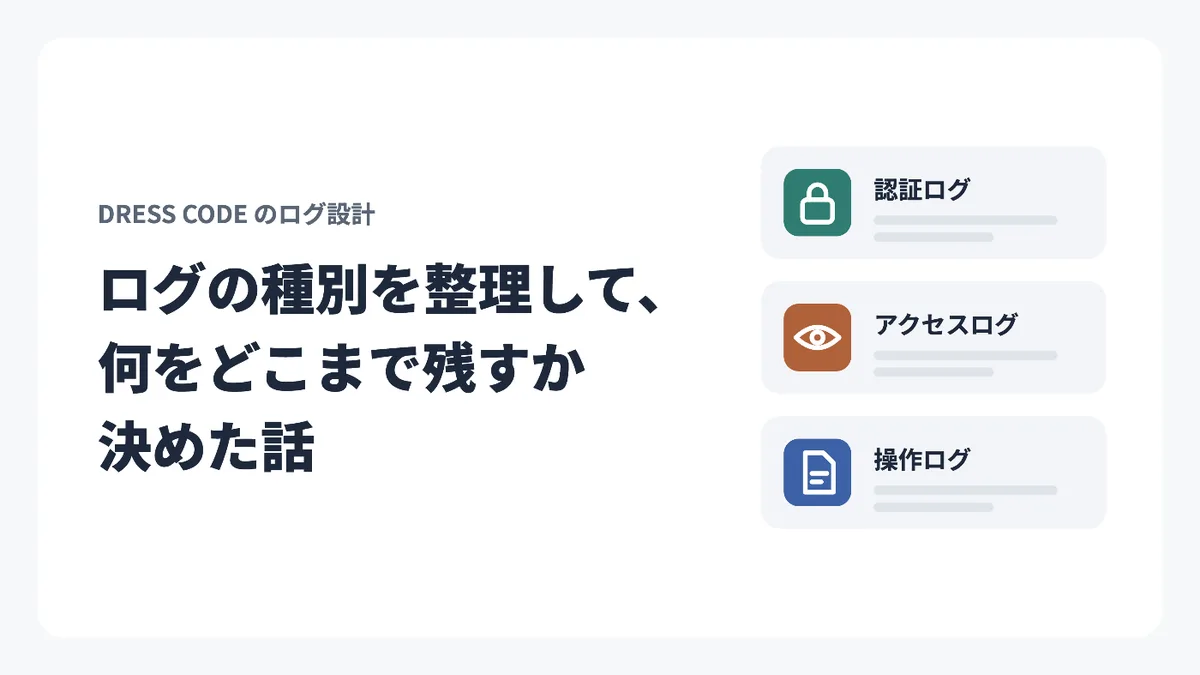
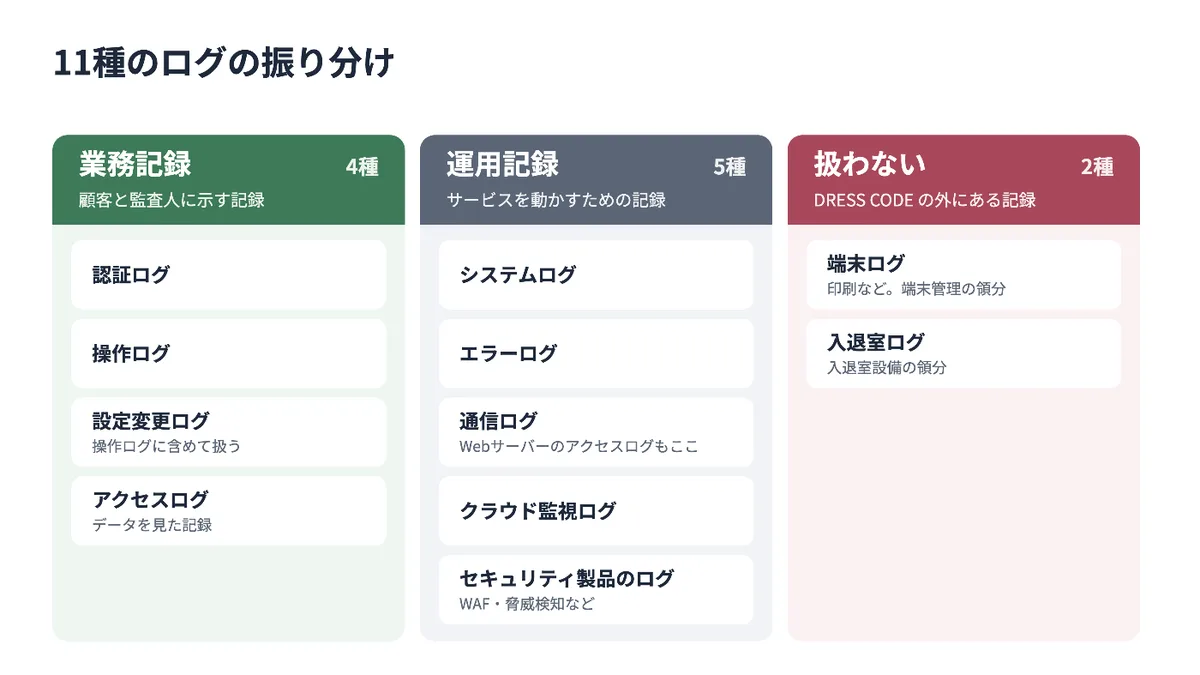
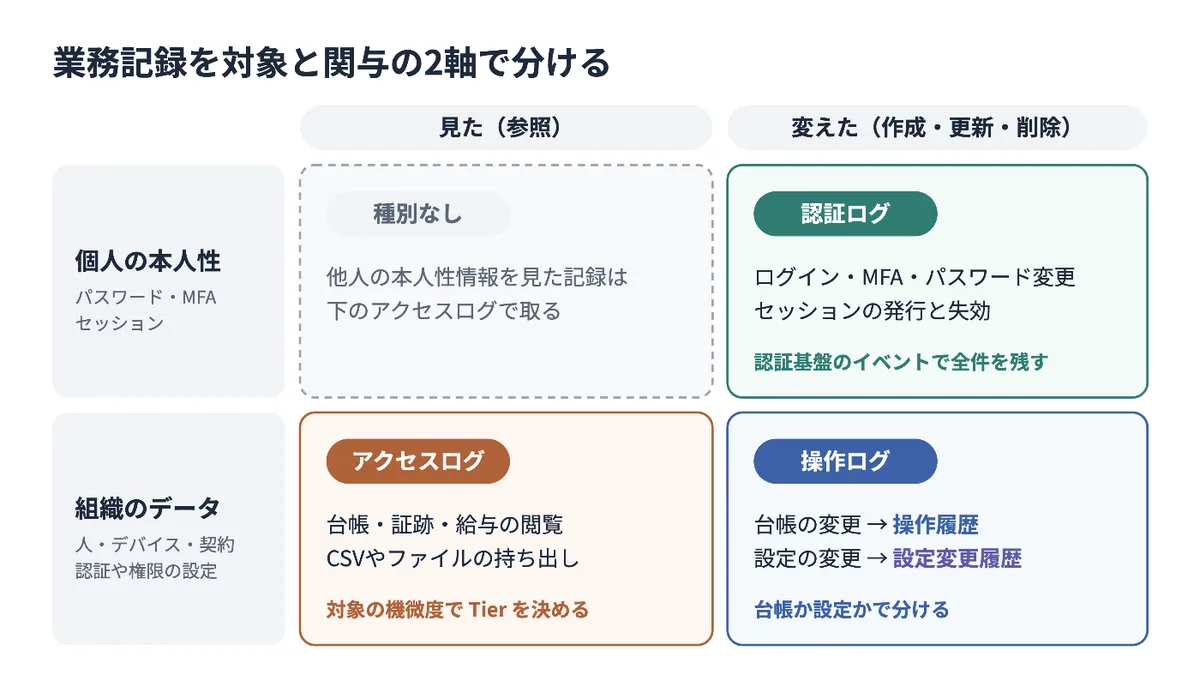
Dress Code Inc. develops and sells DRESS CODE, a workforce management platform that combines HR, recruitment, general affairs and IT. Product engineer Pokohide (@pokohide) writes that the team could not say whether its logs covered everything, including data reads and login attempts. Using public guidelines from NIST and CIS, the team identified 11 log types and sorted them into business records, operational records, and types it does not handle. The business records fall into three types, authentication, access and operation logs, based on what was touched and how. Audit logs and security logs are not separate types; they are selected from these records by purpose.
How much is kept is set separately by a Tier scale from 0 to 3 that the company defined itself[1]. Authentication logs record every event from the authentication platform, including failures, at T3. Access logs depend on the sensitivity of the data: one record is written per request and lists only the names of the fields that were disclosed. Operation logs are split into ledger changes and settings changes, and are kept at T2 or higher.
Records at T2 and above are sent through the Outbox pattern[2] and stored for long-term retention in WORM storage[3]. The team checks coverage against seven events in requirement 10.2.1 of PCI DSS and says each one falls into one of the three types or the operational records.
Sources
-
JPZenn JA
ログの種別を整理して、何をどこまで残すか決めた話

