The Hackening: PHP vulnerabilities trigger a race to secure websites

What happened next
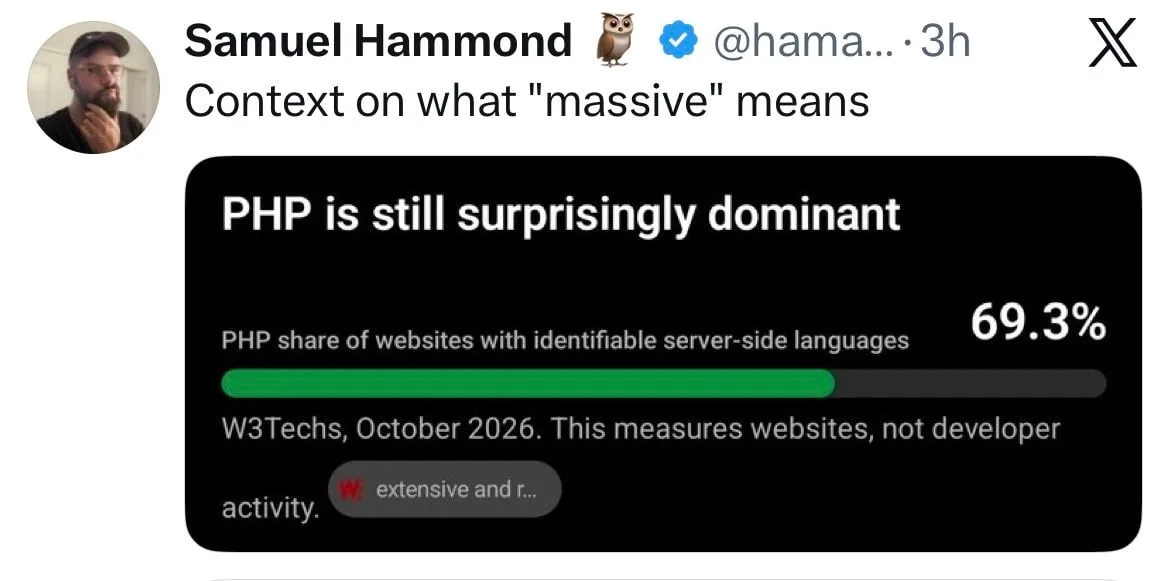
At a small conference, participants predicted that advanced AI and AI agents could make the internet severely hostile within 6–12 months, and some urged personal crisis preparations. Multiple sources using GPT-5.6 Sol identified two critical PHP vulnerabilities that could let attackers take control of servers running unpatched versions; the patch embargo was broken more than six hours before planned disclosure, and Amazon reported attacks as early as October 17. Several sites went offline or read-only while awaiting fixes; Internet Archive was briefly offline, then restored after staff patched older PHP versions and strengthened safeguards. PHP 8.2–8.5 will receive fixes, while PHP 8.1 and earlier are end-of-life (EOL)[1]; among 7.2 million analyzed PHP sites that disclose a version, 46.1% run an EOL branch. Other incidents included a critical GitLab flaw that let attackers run code on self-managed servers without logging in, possible exposure of Railway environment-variable secrets, and Storm-0940 using the ARTEX AI penetration-testing framework in attacks.
Read the original lesswrong.com
Discussion
Commenters recommended basic personal precautions, including keeping sensitive information on a separate air-gapped[2] device and storing a password database and TOTP[3] codes there. Another commenter proposed that OpenAI use agents to exploit vulnerable sites and install fixes.
Sources
-
LessWrong
The Hackening