Frontier Models' Ability to Control Robots Is Rapidly Improving
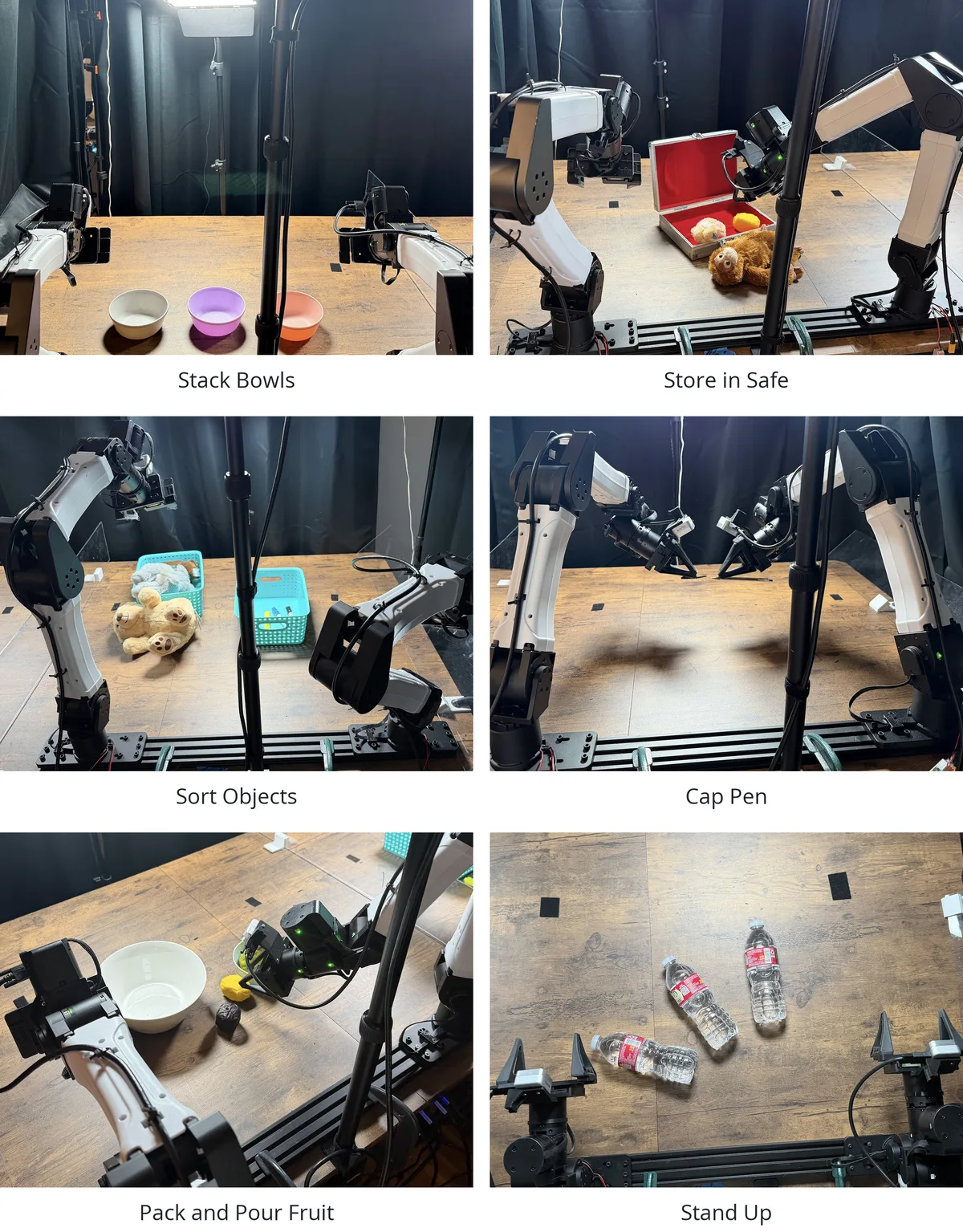
General-purpose multimodal language models are increasingly capable of directly controlling real robotic arms by specifying gripper positions; the methodology was submitted to TAG@CoRL and posted to arXiv (2610.25287). The authors tested nine frontier models across twelve configurations on a real bimanual I2RT YAM robot, using six tasks from the RoboDojo benchmark with 20 trials for each (model, configuration, task) combination. Between July and October 2026 inclusive, benchmark performance followed a doubling time of 53.9 days: the best recorded execution rate increased by a factor of 4.4, while the lowest recorded execution cost fell by a factor of 6.2. Performance is currently limited mainly by efficiency rather than by the ability to reason about the world: models rarely get stuck, and while they may miss grasps, misjudge distances or fumble objects, they usually make steady progress until they succeed.
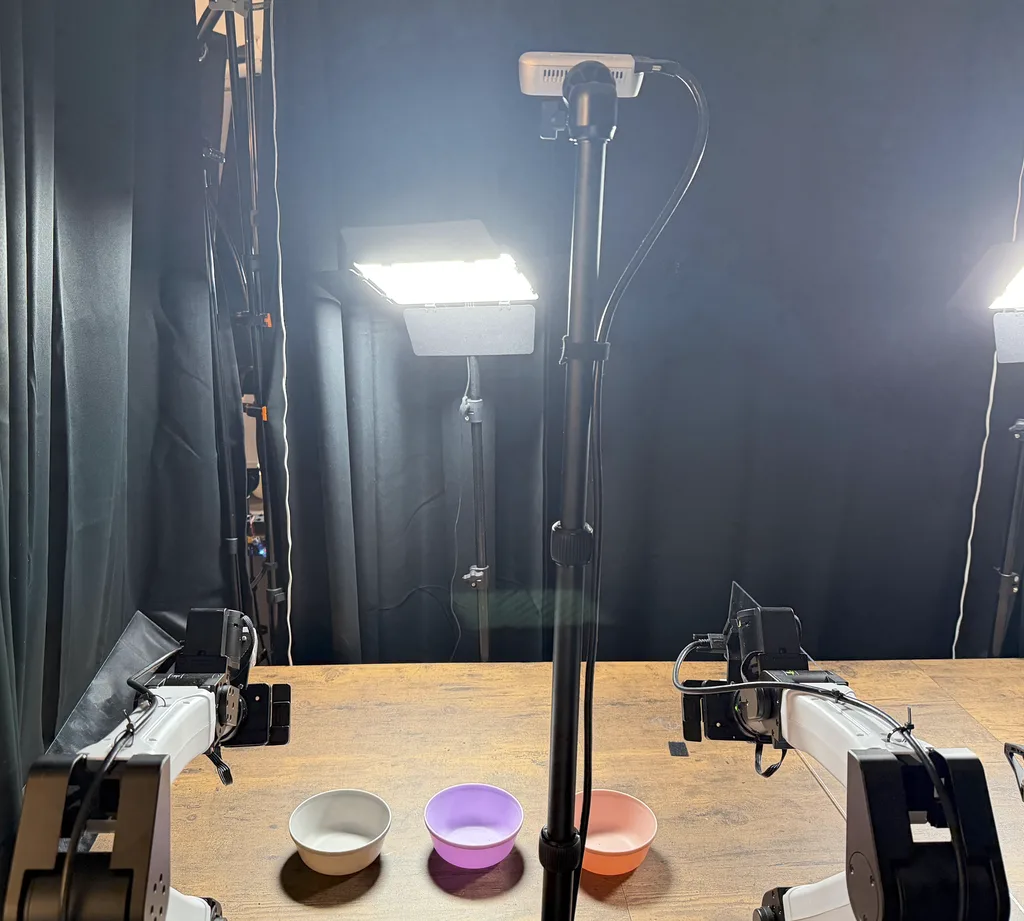
Through the Inspect Robots framework, each model received proprioceptive feedback[1] from the arms and footage from three cameras — two wrist cameras and one overhead camera — and acted in a closed loop: it selected an action, the action was executed, and the new observations were appended to its context until the model finished the trial, exhausted its budget of 40 actions, or a hardware fault occurred. Available actions were move_to (Cartesian end-effector[2] control via an (x, y, z, yaw, pitch, roll, aperture) tuple for each arm), done, and give_up. Trials were graded for partial progress against a list of subtasks by an instance of GPT-6 Astra (H) reviewing footage from the three cameras.
The tested models were four from OpenAI (GPT-5.6 Sol, GPT-6 Sol, GPT-6 Astra, GPT-6.1 Sol), two from Anthropic (Opus 5 and Opus 5.5) and three from Google DeepMind (Gemini 3.6 Flash, Gemini 3.8 Flash and Gemini 4 Argon), each run in several reasoning-effort and service configurations. The authors argue that manipulation, not locomotion, is the main bottleneck for applying models to the physical sciences: a pair of arms with wrist and overhead cameras is enough for basic chemistry, and ten fixed arms with cameras can operate a wet lab. They also warn that synthesizing plagues is out of reach of most lone actors only because wet work is hard; if VLMs[3] can control robots, an attacker could buy two arms and some reagents and instruct an abliterated[4] model to use them.
Read the original lesswrong.com
Sources
-
LessWrong
The Ability of Frontier Models to Control Robots is Rapidly Improving


