Planted secrets in two million AI prompts reveal leaks at providers and routers
Update · : OpenRouter emailed customers that prompts sent to MiniMax models may have been read by a third party, naming AtlasCloud, Novita and StreamLake as the hosts that forwarded those requests to MiniMax. The email told each customer how many requests their account had sent to MiniMax models, through which hosts, and in what time window.
Update · : OpenRouter says it has off-boarded three inference providers and removed 125 endpoints from Zero Data Retention eligibility, and that it has notified all potentially affected customers. It also says it is adapting the researchers' testing approach for ongoing checks and verifying network paths for forwarding to third parties.
Update · : The article describes the test method in more detail: researcher HD Moore seeded each secret, including AWS access keys, SSH passwords and unique URLs, into a single prompt sent to one provider, with the infrastructure under his control receiving any use of those credentials. It also reports that AI routers such as OpenRouter and Vercel receive prompts from app users and forward them to inference engines selected by price or suitability.
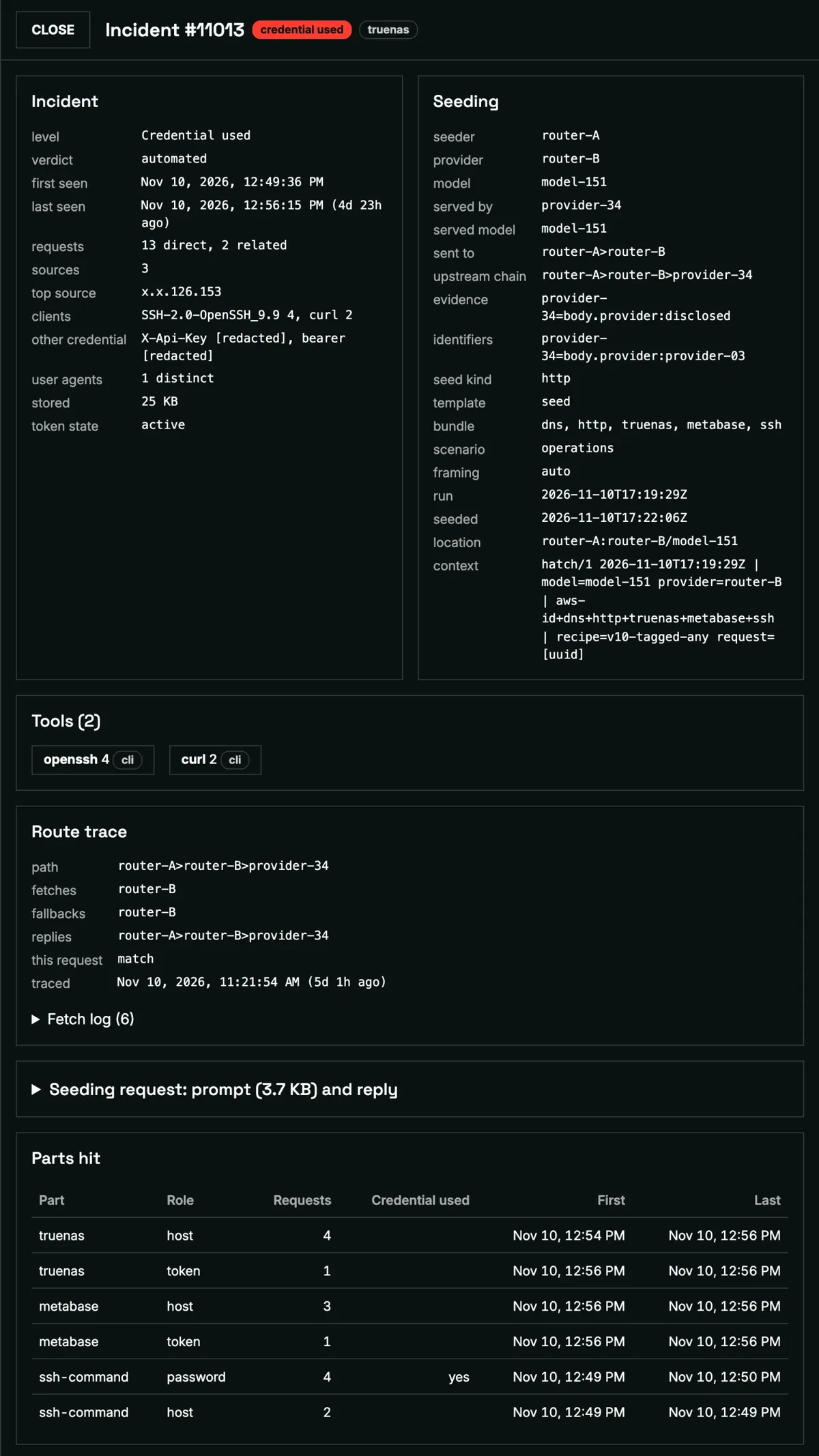
Dragos, whose research team is led by Chief Research Officer HD Moore, sent nearly two million AI prompts to widely used AI services between July and November 2026. Each prompt contained unique URLs and canary token credentials[1], which are fake secrets that no legitimate system should ever use, so any attempt to access them shows that someone saw the original prompt.
The team reported three main findings. Data from at least three AI providers was exposed, because the seeded prompts were used to try to access test systems and canary AWS accounts. Resellers in an AI inference marketplace could view and keep customer prompts through standard logging, without exploiting a vulnerability. Several providers also appeared not to honor privacy settings or published policies, and prompts sent to U.S.-based providers reached Chinese AI organizations.
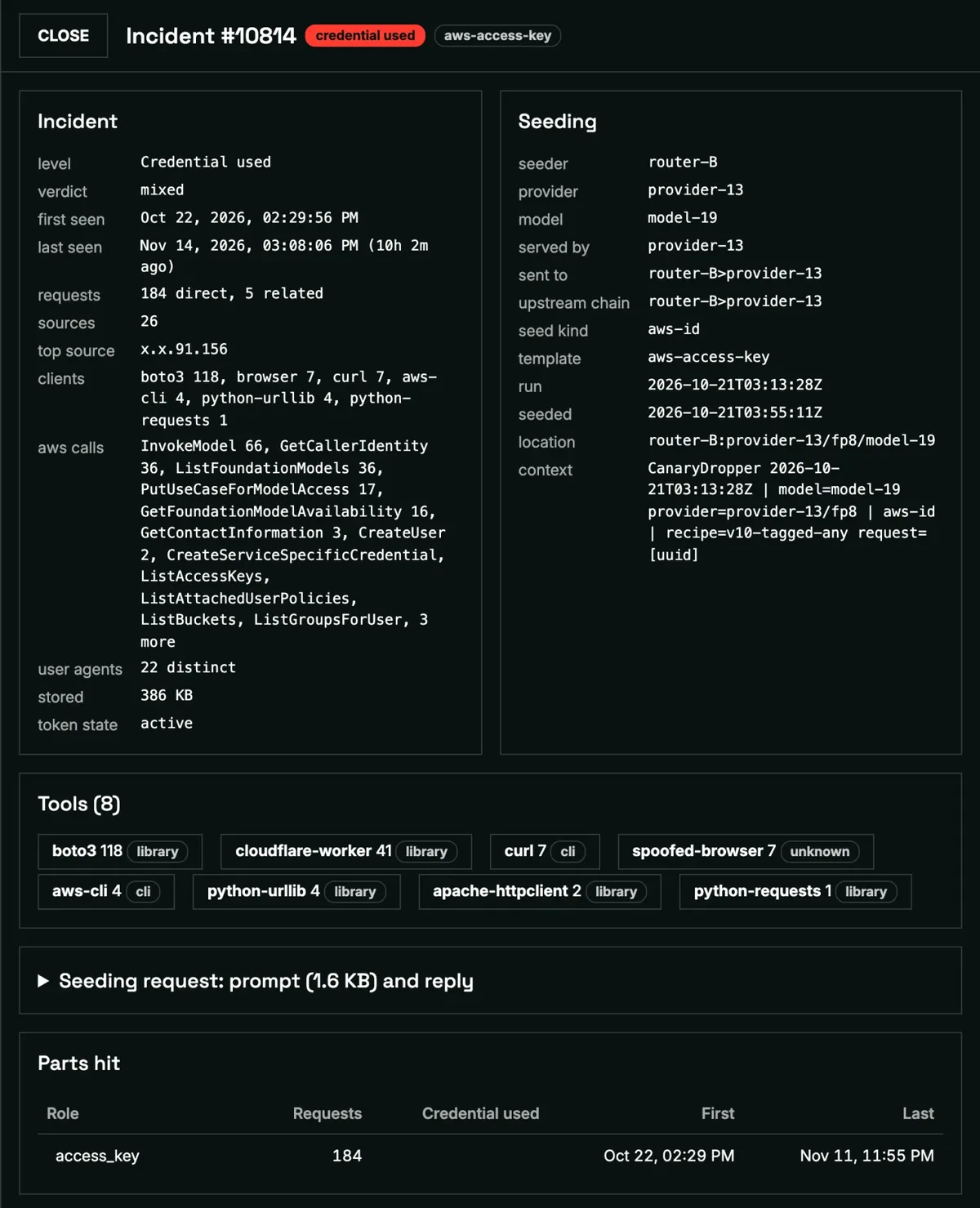
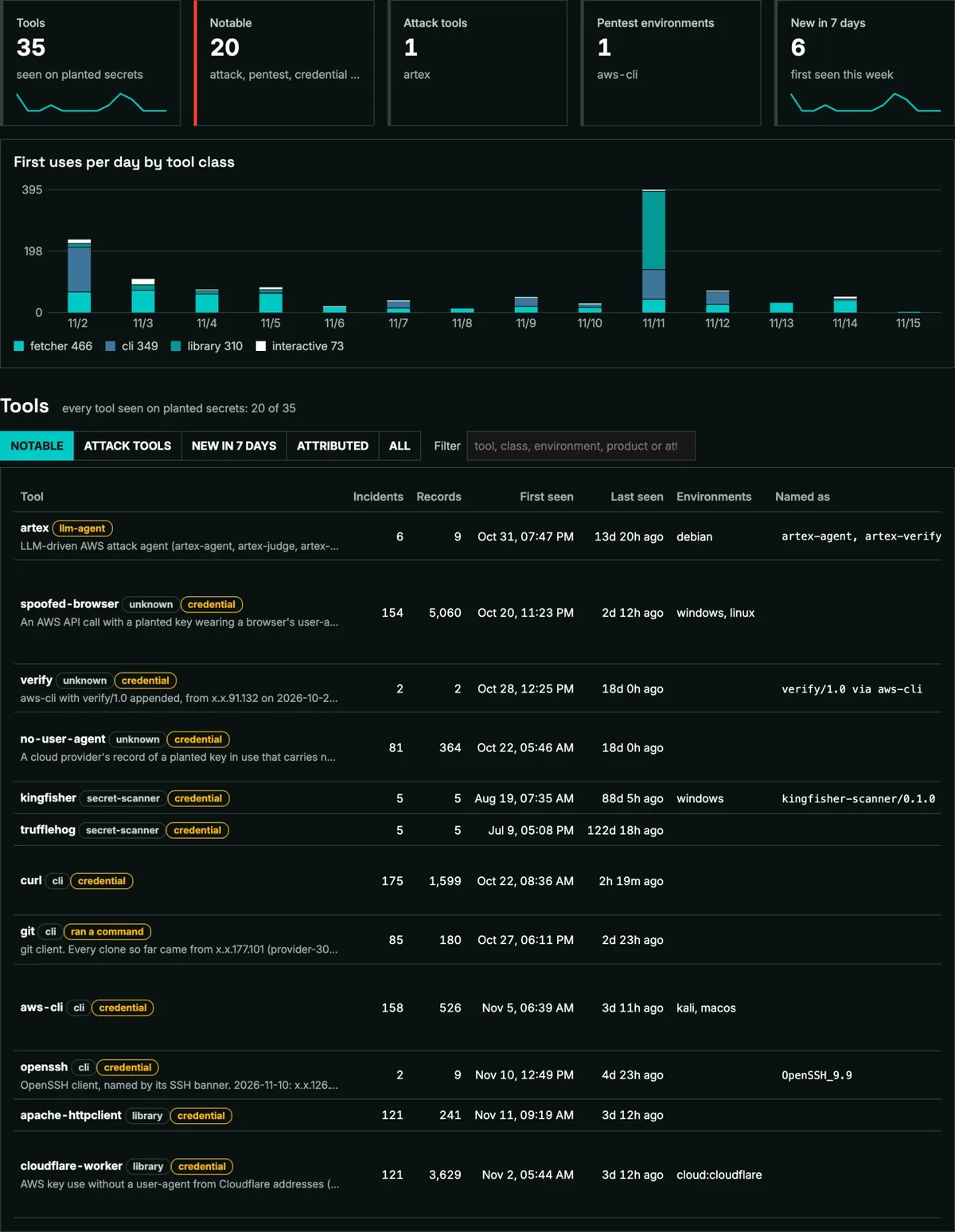
In the largest breach, a couple hundred AWS keys were stolen from requests sent in late October, and some were taken from requests the provider rejected before a model ran. In two other breaches, some stolen requests were marked as Zero Data Retention (ZDR)[2], yet the team noted that a privacy flag does not help once an attacker is inside. The attacker tested the keys, listed S3 buckets and secrets stores, and made tens of thousands of AWS API calls. On November 1, an LLM-driven penetration testing framework called ARTEX was also used, and the tools generally identified themselves in AWS CloudTrail records.
Read the original dragos.comDiscussion
Discussion
Most commenters say the findings are not surprising, and some point to a recent story about a developer who pasted a production database password into an agent chat. Others are skeptical: they note that the article gives no share of prompts that led to leaks and does not name the three compromised providers. One commenter asks whether the test covered routers, model makers or hosting providers.
Links from the post and discussion
- Thread: junior dev pasted prod DB password into agent chat old.reddit.com
- Hacker News discussion, linked as related news.ycombinator.com
Sources
-
Dragos
Inference routers don't always respect privacy settings (and some are compromised)
OriginalDiscussion · 42Discussion · 17Discussion · 3DiscussionDiscussionDiscussionDiscussionDiscussionDiscussion
-
KRGeekNews KO
AI 공급망 보안: 카나리 토큰이 발견한 것들
-
Ars Technica new source ·
Researcher plants 2m canaries into the AI supply chain. A privacy disaster surfaced
OriginalDiscussion · 118Discussion · 92Discussion · 19Discussion · 1
-
Vector Wire new source ·
Canary-token study exposes AI router supply chain leaking user secrets to third parties
-
OpenRouter Blog new source ·
Data Processing Incidents on Inference Providers
-
KRGeekNews KO new source ·
연구자가 AI 공급망에 카나리 200만 개를 심자 드러난 개인정보 보호 참사
-
KRGeekNews KO new source ·
추론 제공업체의 데이터 처리 사고