Dinosaur blood found in 115-million-year-old fossils for the first time
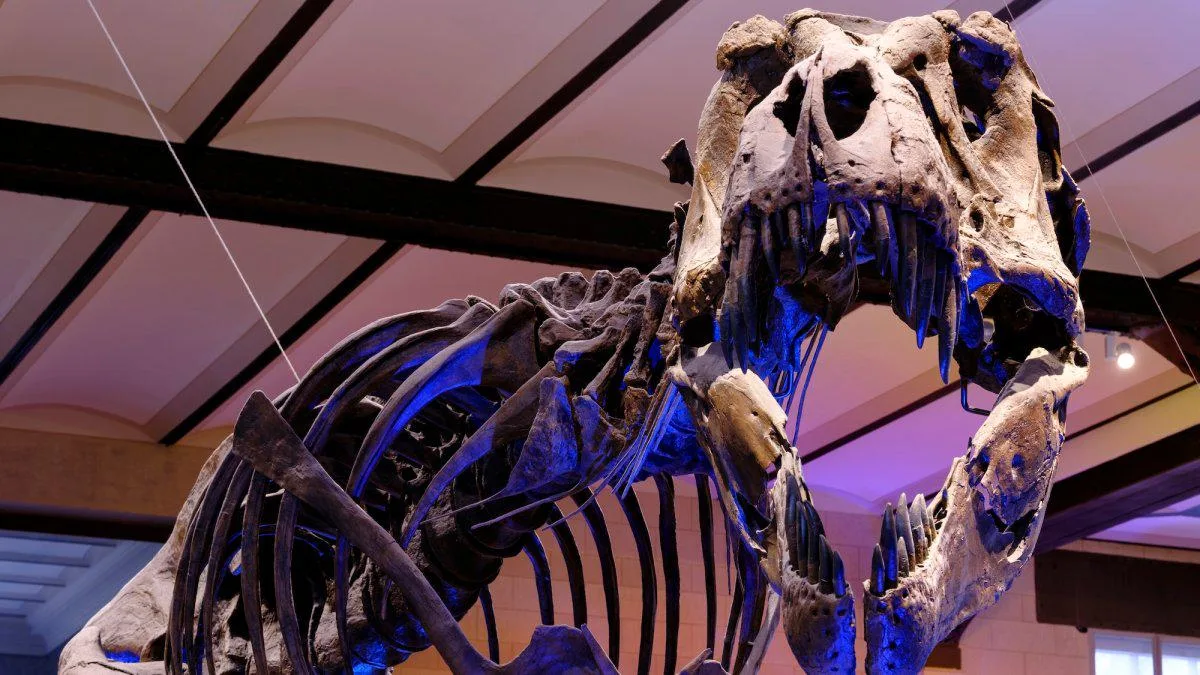
An international team of paleontologists reports in Proceedings of the National Academy of Sciences (PNAS) that fossils of a 115-million-year-old dinosaur contain intact biomolecules and mineralized red blood cells. The study is the first to chemically identify heme[1], an oxygen-carrying blood compound. The evidence was found in the fossilized limb bones of a juvenile Aratasaurus museunacionali, a theropod[2] from the Early Cretaceous[3] that lived in present-day northeastern Brazil; the specimen was discovered in 2008. The fossils suggest an animal over 10 feet long and weighing about 75 pounds, and because it was young, it likely grew even larger.
The preservation is attributed to hausmannite[4], a complex manganese oxide that maintained the cellular structures of heme and helped preserve other blood biomolecules, including the amino acids in collagen. The study's authors theorize this level of preservation could only occur after a rapid burial in an environment that was rich in microbes but low in oxygen. Study co-author Kliti Grice, a chemist at Curtin University in Australia, said the findings challenge longstanding assumptions that biomolecules such as hemoglobin cannot survive deep time. The team says further study could advance understanding of blood's evolution, dinosaur metabolism, and ancient animals' activity levels, and that if such delicate biomolecules can fossilize over millions of years, similar traces of life may linger elsewhere in the universe.
Read the original popsci.comDiscussion
Discussion
Most commenters joke about cloning dinosaurs and quote Jurassic Park. One argues that mineralized red blood cells hardly qualify as "blood", and another points to DNA's few-million-year survival limit as the obstacle to cloning.
Sources
-
popsci.com
Dinosaur blood found in fossils for the first time