Developers launch OccupySaaS to clone Auth0, Salesforce and other SaaS services with AI
Update · : The project's first two replacements are now named and under way: ZeroAuthy, a self-hosted Go authentication server implementing the Auth0 Authentication API, and SalesCompel, an open-source Salesforce alternative with a Go/PostgreSQL core, both at an early stage with full Salesforce compatibility and production readiness unverified. Development follows a documented clean-room process in which specification writers and implementers are kept separate, with AI agents implementing OpenAPI contracts and humans reviewing every merge.
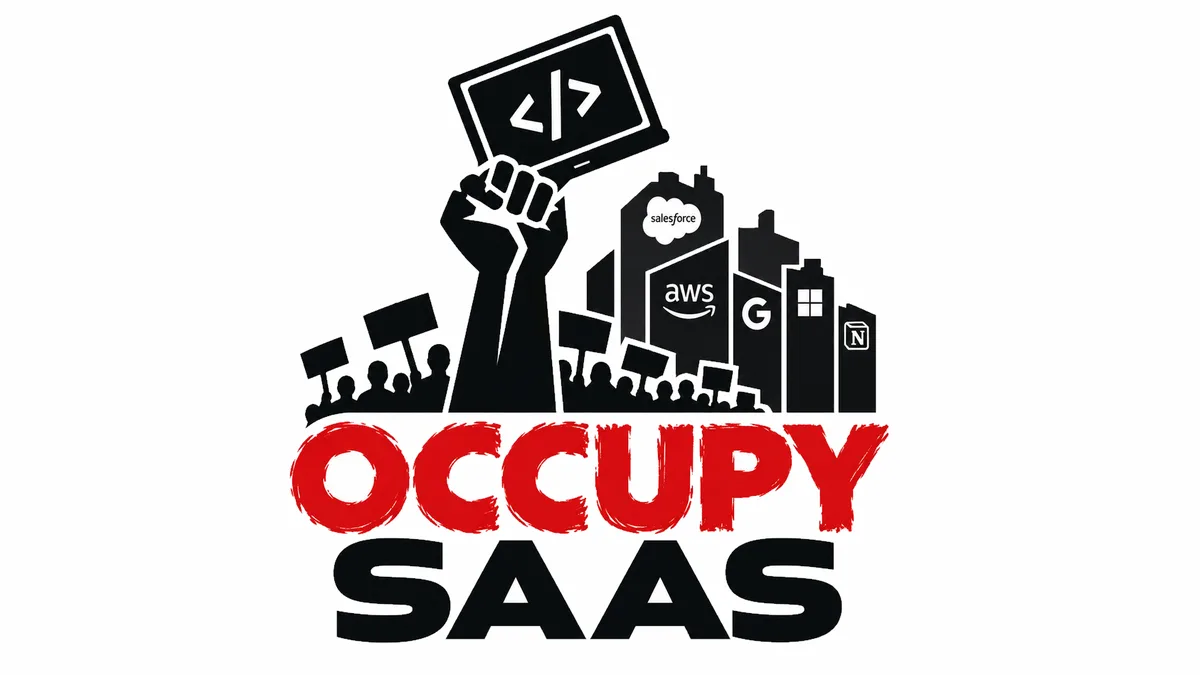
The OccupySaaS project aims to replace popular SaaS[1] services with open-source clones built through clean-room reimplementation[2] using AI tools. Work has already started on ZeroAuthy and SalesCompel, intended as replacements for Auth0 and Salesforce, and the project also lists document and wiki management, issue tracking, feature flagging, observability[3] and customer support as targets, with Confluence, Jira, LaunchDarkly, Datadog and Zendesk as the presumed candidates. The effort is part of the ongoing wave of vibe coding[4], where software is produced mainly by directing AI tools. Because the targeted services run on their vendors' servers, there are no binaries to decompile, so the reimplementations reference available documentation, APIs, development kit behaviors and open standards, aiming to work as API-compatible drop-in replacements where applicable.
The project requires fully clean-room work: no decompiled code, no confidential information (including source code) taken from previous employers, and no copying of UI assets or trademarks. Since the hosted originals are effectively black boxes, replacements — like console emulators — must reproduce existing API bugs to stay fully compatible. The language of choice is Go, picked over Rust because it easily compiles and links all dependencies into a single binary without an installer that can be copied to a target system and executed, which makes it suitable for Docker containers and other forms of self-hosting. The software is Apache 2.0-licensed, so nothing stops third parties from offering hosted services on top of it, as with Red Hat Enterprise Linux, GitLab and WordPress.
The project is the brainchild of Thomas Meadows, a software engineer with two decades of experience who lists project management as his strong suit. His project website reads like a manifesto, arguing that per-seat licensing taxes growth and that 'the software built by the 99% belongs to the 99%.'
Read the original tomshardware.comDiscussion
Discussion
Commenters are split. Many question handing security-critical software like an authentication provider to AI-generated code, saying that without strong security researchers on staff you are asking to get owned. Others argue the real value of these services is shifting operational complexity and risk to the vendor, and that contributing to existing open-source alternatives makes more sense than cloning, though some comments back the anti-subscription motivation.
Sources
-
Tom's Hardware
Disgruntled software developers start ambitious open-source revolt, using AI to clone common services — OccupySaaS AI-powered project wants to kick Auth0, Salesforce, and other pricy service-as-software to the curb
-
occupysaas.com new source ·
OccupySaaS — They laid us off. We're rebuilding their SaaS
-
KRGeekNews KO new source ·
OccupySaaS - 해고된 엔지니어들이 AI로 만드는 오픈소스 SaaS 대체 프로젝트


