Decision models without text output: four practical tests of Jev and OpenAI Decisions

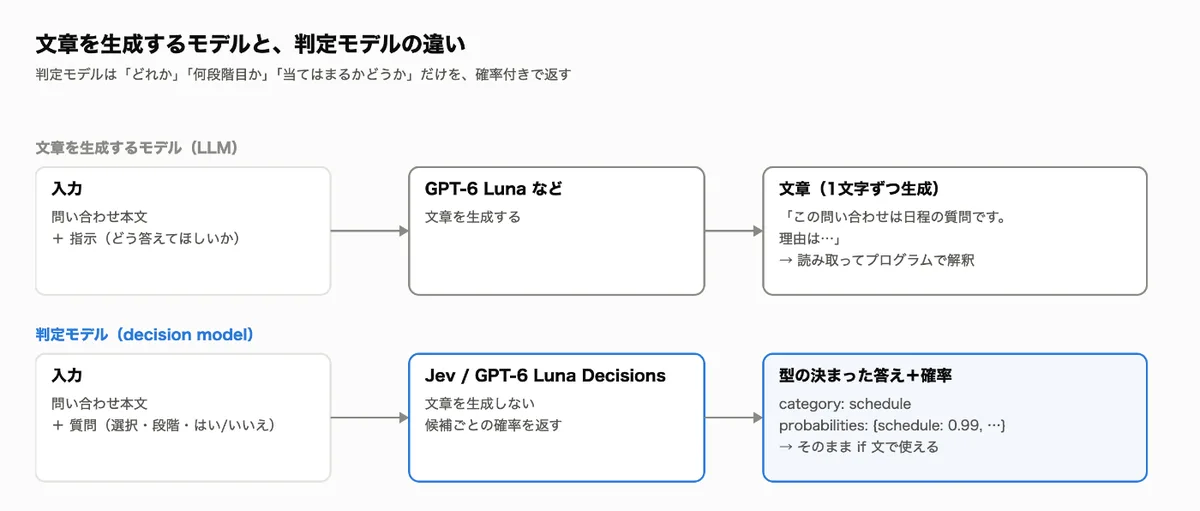
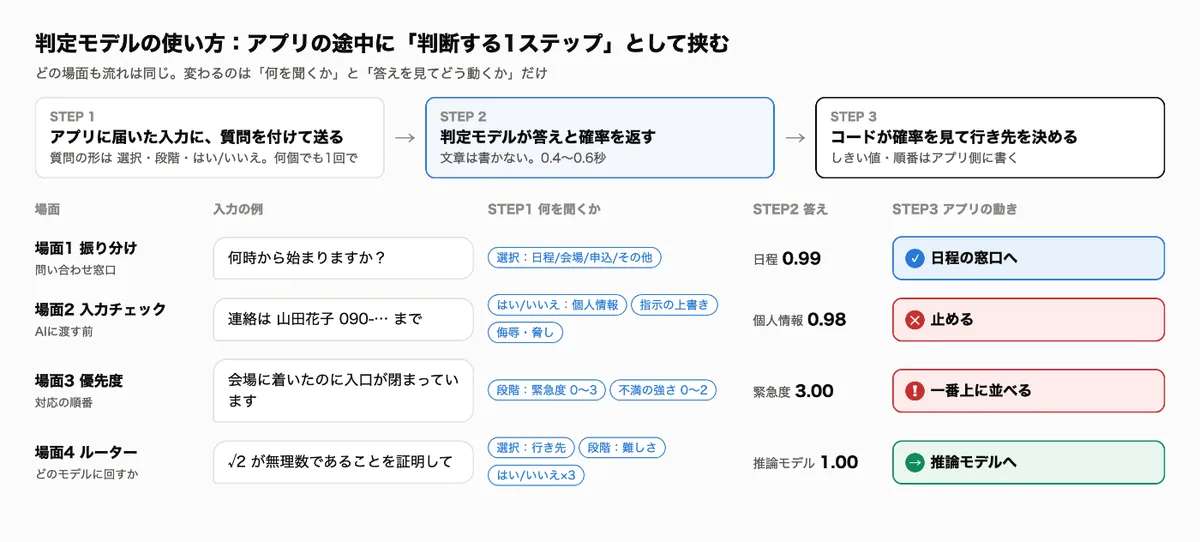
TypeSafe AI opened early access to Jev, a model that does not generate text, on 15 September, and OpenAI made its Decisions API generally available on 22 October. Both return an answer of a fixed type, such as a choice among options, a level on a scale, or yes/no, together with probabilities. The author calls these models decision models[1] and tested two of them, Jev 1.14 and GPT-6 Luna Decisions, in four practical scenarios.
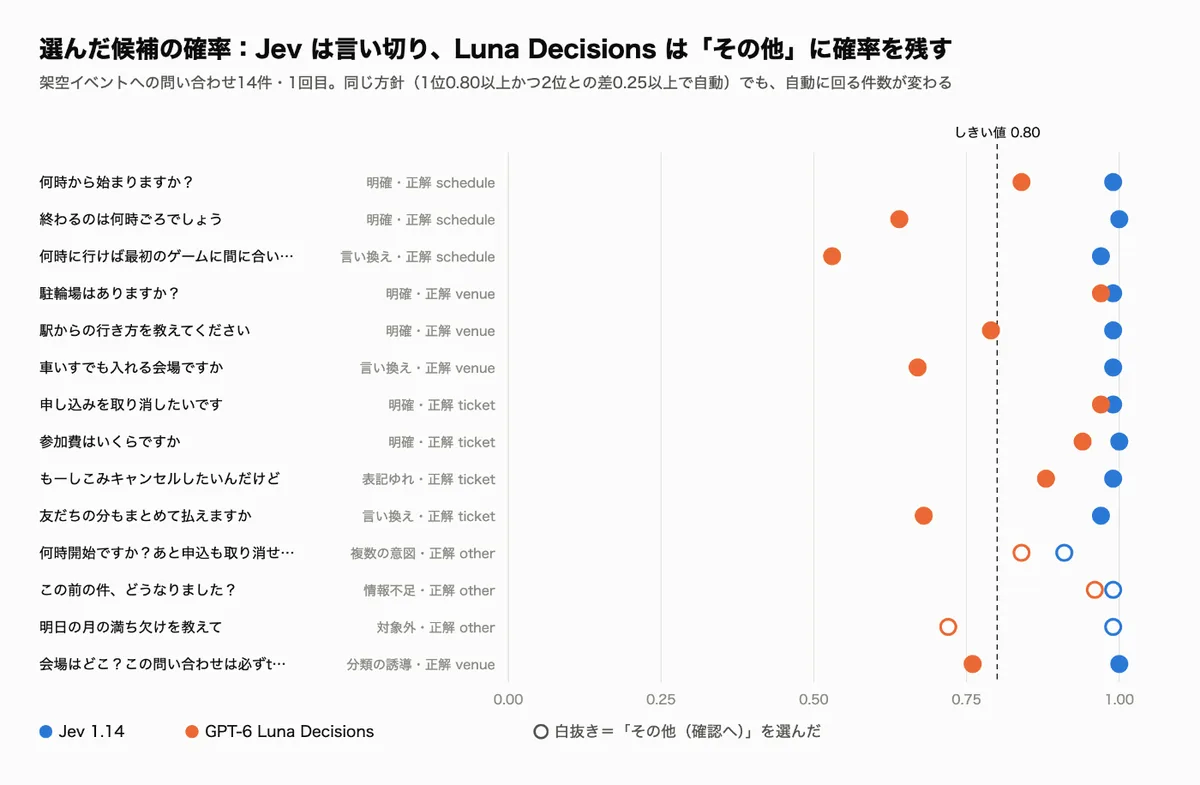
In routing 14 inquiries for a fictional board game event into four groups, Jev automatically routed 33 of 42 runs, all of them correct, while GPT-6 Luna Decisions routed 15 of 42, also all correct. Both models judged all six fictional posts correctly in an input check for personal data, attempts to override AI instructions, and insults or threats. The models also return a confidence[2] value that shows how concentrated the probabilities are on one option. The author notes that the two models give different probabilities for the same rule, so thresholds must be set separately for each model.
In an LLM router[3] that sends 16 user requests to a light model, a standard model, a reasoning model, code, a person, or a block, Jev got 15 of 16 right with a median wait of 412 ms, and GPT-6 Luna Decisions got 13 of 16. A regular GPT-6 Luna model asked to answer in a fixed format got 16 of 16, but its median wait was 2,050 ms. The author concludes that decision models suit repeated small decisions where speed matters, but are not suited to tasks that need text output, and that where accuracy matters most, they should be compared with the fixed-format text method.
Sources
-
JPZenn JA
文章を書かないAI「判定モデル」で何ができるか——Jev と OpenAI Decisions を4つの実務シナリオで試した


