Data centers raise power bills for lower-income and rural residents, Cornell study finds
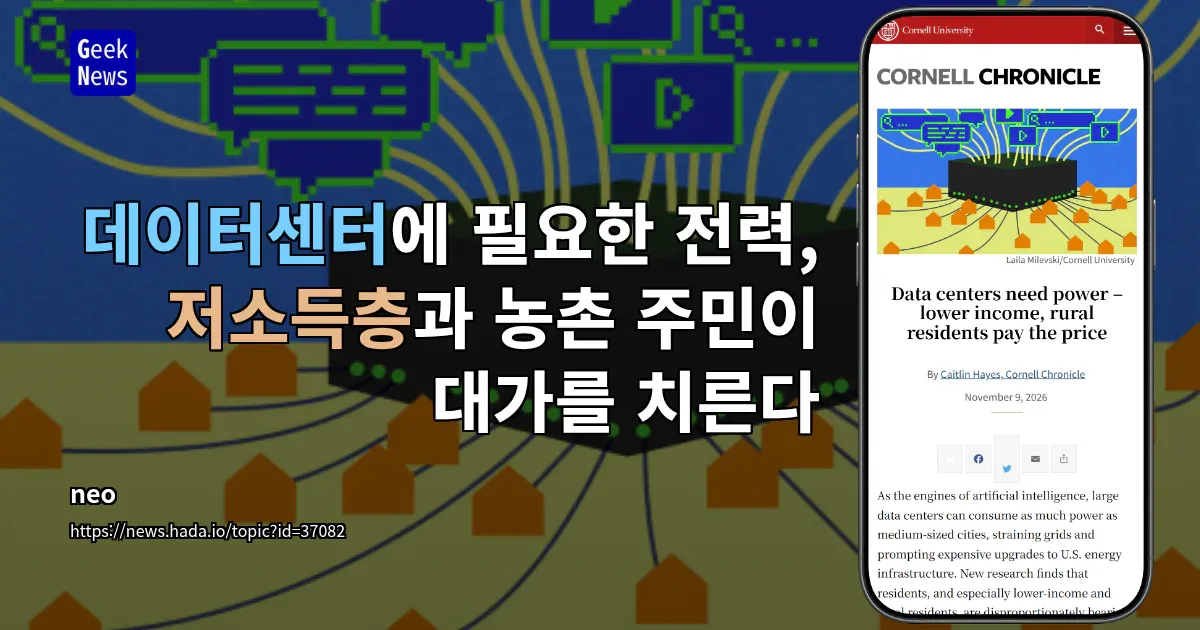
A study by Cornell researchers, published on 9 November in the journal Nature Energy, examines who pays for the grid expansion caused by data centers. The team analyzed growth in energy demand and infrastructure projects for four major US power grids from 2020 to 2025, and data from 4,000 existing and proposed data centers.
The researchers found that data centers paid only 38% of the infrastructure costs linked to their growth: $3.12 billion of an $8.25 billion bill in 2025. The remaining $5.13 billion, or 62%, fell largely on residents, and the lowest-income households saw extra energy costs of up to 28% of their incomes. Data centers also raised wholesale electricity prices[1] by nearly 10% or more by 2025 in the most affected hubs, including 15% in Virginia and 20% in California's southern Bay Area.
Rural families spending more than 6% of their incomes on energy rose 76% more than urban residents. The authors suggest changing cost-sharing rules, which often follow past consumption, and having data centers cut back during 22 peak demand hours[2] each year. Six states have set special terms for very large energy consumers, and in March seven technology companies signed the White House Ratepayer Protection Pledge[3], a commitment to pay for required grid updates.
Read the original news.cornell.eduDiscussion on GeekNews
Discussion
Commenters mostly argue about the cause of rising bills. Some say the real problem is policy limits on building new power supply and a lack of new baseload generation for more than 15 years, not data centers themselves. Others argue that residents should get a share of the benefits, such as property tax revenue or a dividend, or that local voters should have pushed for data centers to pay their own costs.
Links from the post and discussion
Sources
-
KRGeekNews KO
데이터센터에 필요한 전력, 저소득층과 농촌 주민이 대가를 치른다
-
Cornell Chronicle
Data centers need power – lower income, rural residents pay the price