China Telecom modem plugin reportedly extracts phone numbers and scans home networks
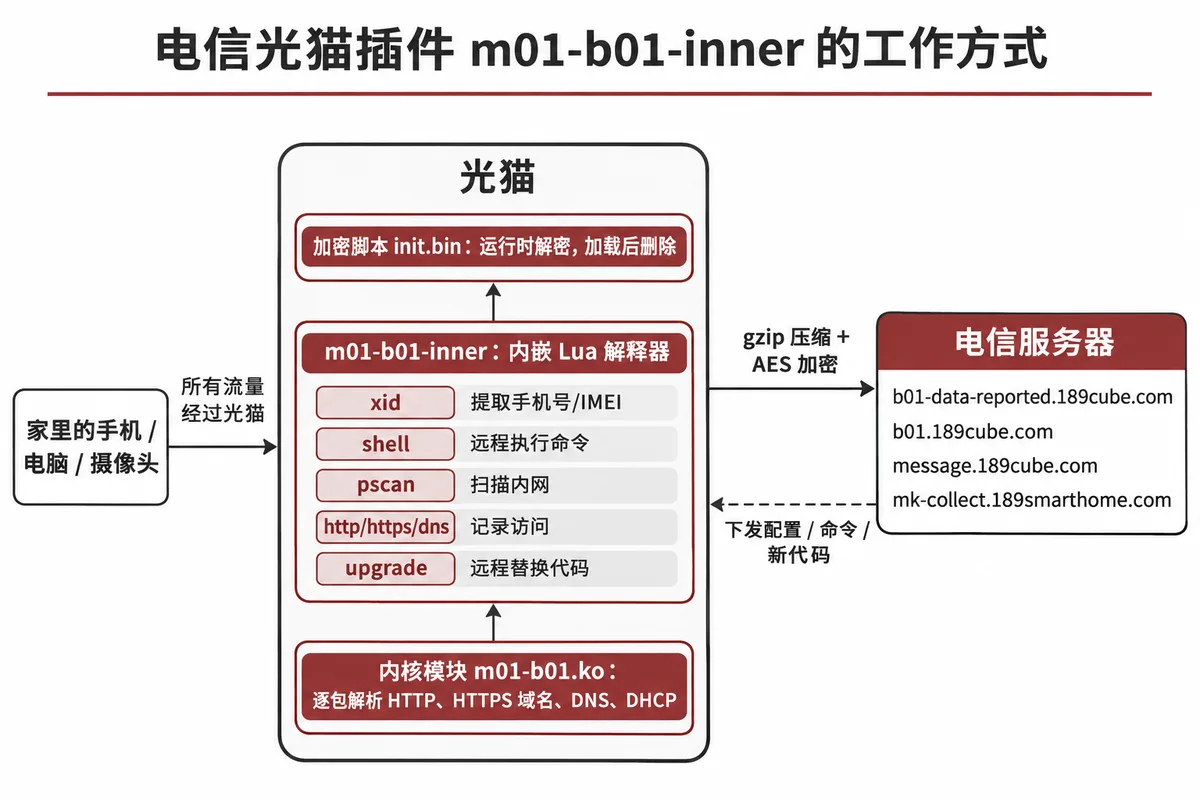
The author reports extracting the source code of a plugin called m01-b01-inner from the memory of two China Telecom devices that connect homes to fibre-optic internet. The plugin's logic is written in Lua[1] and stored encrypted, so readable code never appears on disk. The author says the plugin is preinstalled and that its xid module is enabled by default. According to the author, xid looks for phone numbers, IMEI, IMSI and other device identifiers in HTTP traffic that passes through the modem, and uploads them every 30 minutes.
According to the author, the plugin can run arbitrary commands as root and return the results, and can download a scanner from a server to check the whole home local network. The scanner's parameters match those of nmap[2]. The plugin can also log HTTP addresses, HTTPS domains, DNS queries and raw packets, and can redirect pages the user opens. Many modules are off by default and are switched on by server settings, so what the modem does depends on what the China Telecom server sends it.
Uploads are gzip-compressed and AES-encrypted, and each record carries the modem's LOID[3], a broadband registration code that the author says is tied to a real-name account. The author analysed read-only memory dumps and did not run or modify the plugin.
Discussion
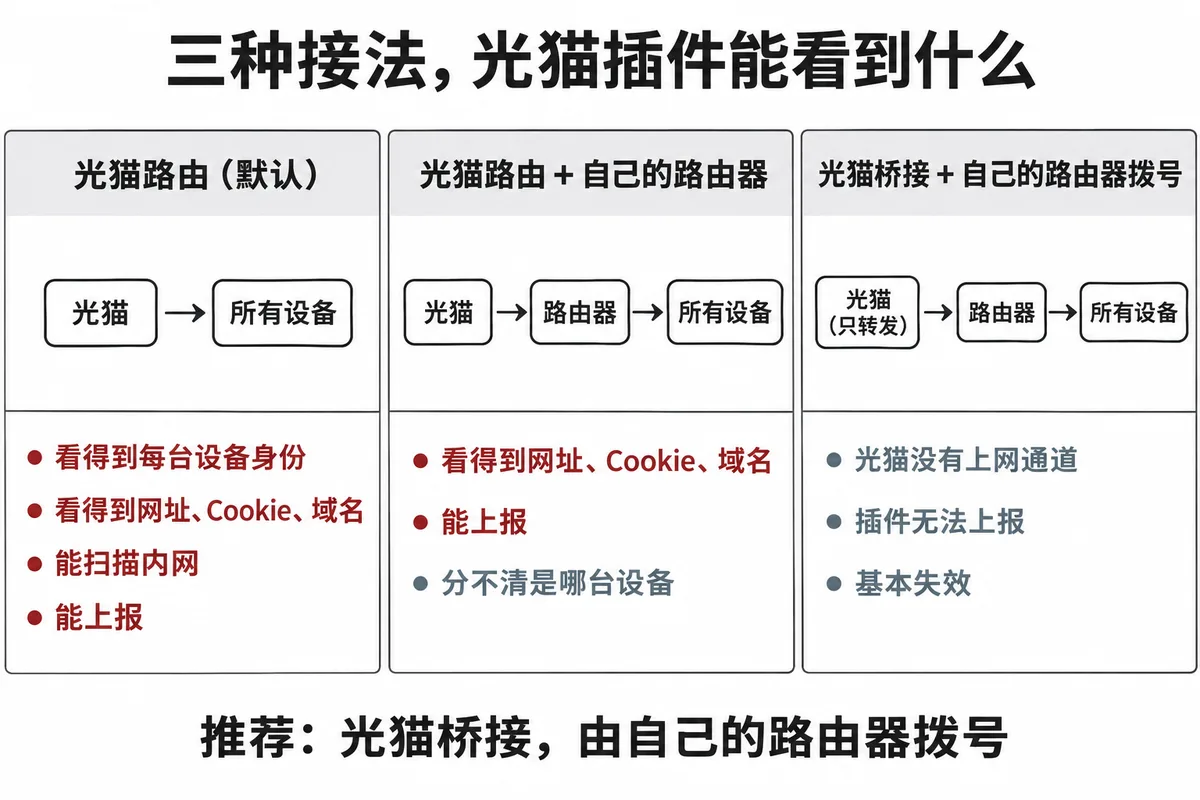
Most commenters say they avoid the plugin by switching the modem to bridge mode or using a separate router, and some say the operator can see the device list anyway. One user confirmed that m01-b01-inner also runs on their modem, though with a different fingerprint, and another said a Xiaomi router sends its GET requests, including DDNS usernames and passwords, to a Xiaomi server.
Sources
-
CNV2EX ZH
我解密了电信光猫里的 m01-b01-inner 插件:它能提取手机号、IMEI,能远程执行命令,还能扫描你家内网