CATL explores lithium-air battery that could theoretically offer over 2,000 km range
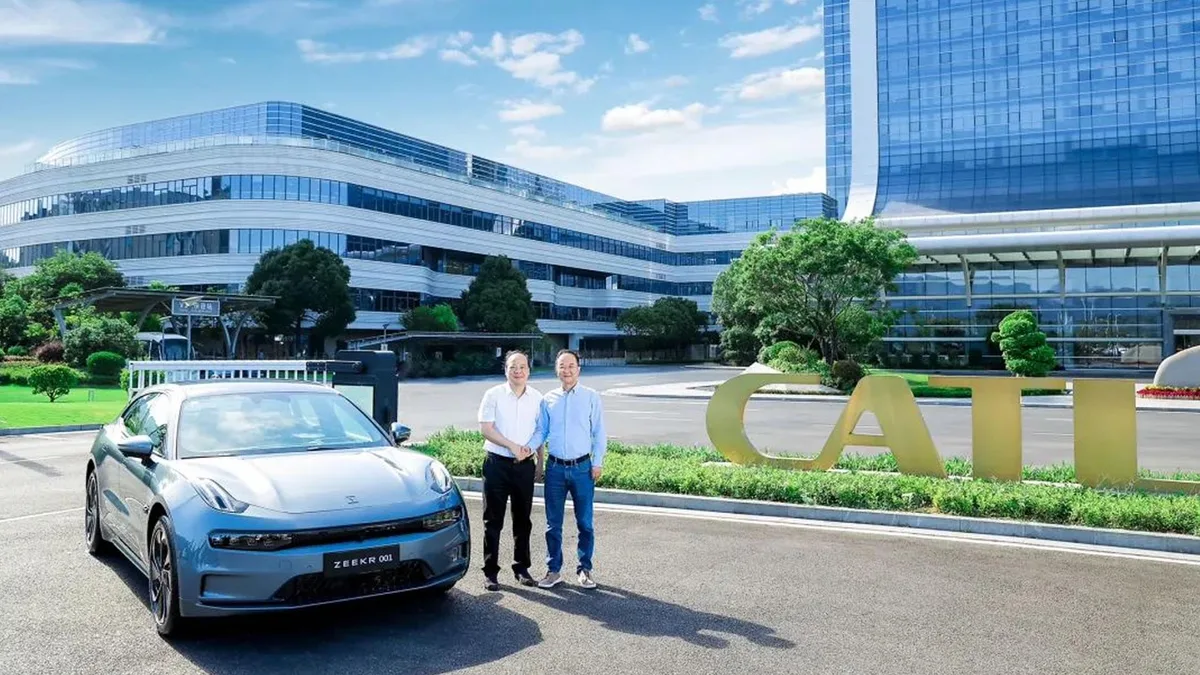
Chinese battery maker CATL is reportedly exploring a lithium-air battery[1]. In theory, it could give electric vehicles over 1,243 miles (2,000 km) of range and at least five times the energy density[2] of solid-state batteries, without adding weight.
Unlike a lithium-ion battery, which holds all its reactive materials inside, a lithium-air battery takes oxygen from the air. During discharge, lithium metal reacts with oxygen to form lithium peroxide[3] (Li₂O₂) and release electricity. Charging reverses the reaction.
The theoretical energy density is 3,505 Wh/kg, compared with about 200–300 Wh/kg for a typical lithium-ion cell and 350–500 Wh/kg for advanced solid-state batteries. This figure is based on the chemistry and oxygen mass and does not necessarily reflect real battery performance. The main problem is that solid lithium peroxide builds up in the porous electrode[4], blocking oxygen and reducing usable capacity, and charging does not fully reverse this. Air also contains water and carbon dioxide, which can form hard-to-remove contaminants, so a built-in air filtration system may be needed. CATL describes the technology as a long-term exploratory research project and has not shown that it can be commercialized.
Read the original interestingengineering.comDiscussion
Discussion
Commenters mostly doubt the headline and the timeline. Several say the technology is still at an early lab stage and at least a decade from production, and they point to the article's own caveats about recharging and durability. Others compare it with solid-state batteries, which they expect to reach production sooner, and with Chinese EVs.
Sources
-
interestingengineering.com
1,200+ miles range: Chinese firm unveils new lithium air EV battery