The case for improving AI's conceptual reasoning faster than general capabilities
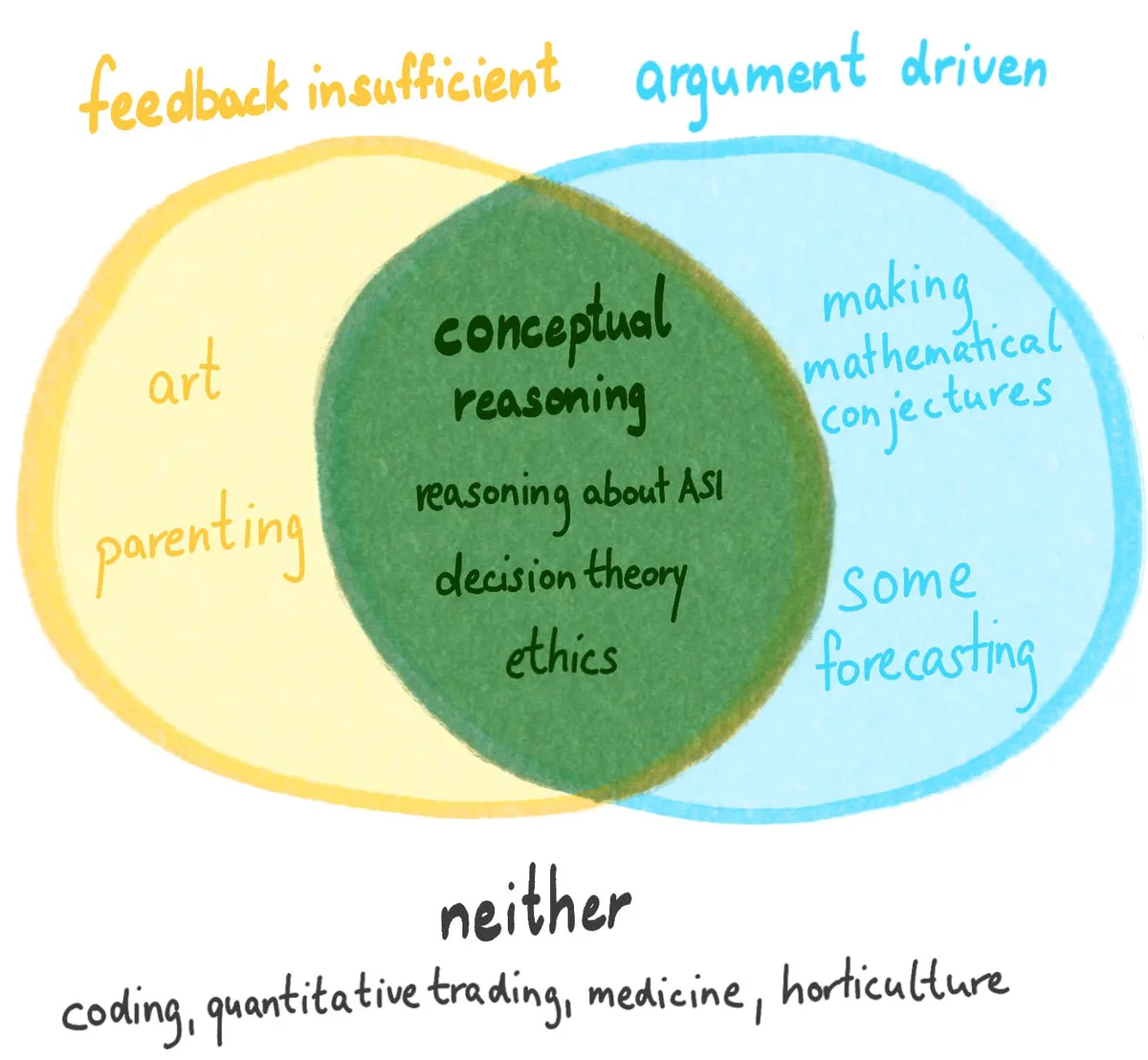
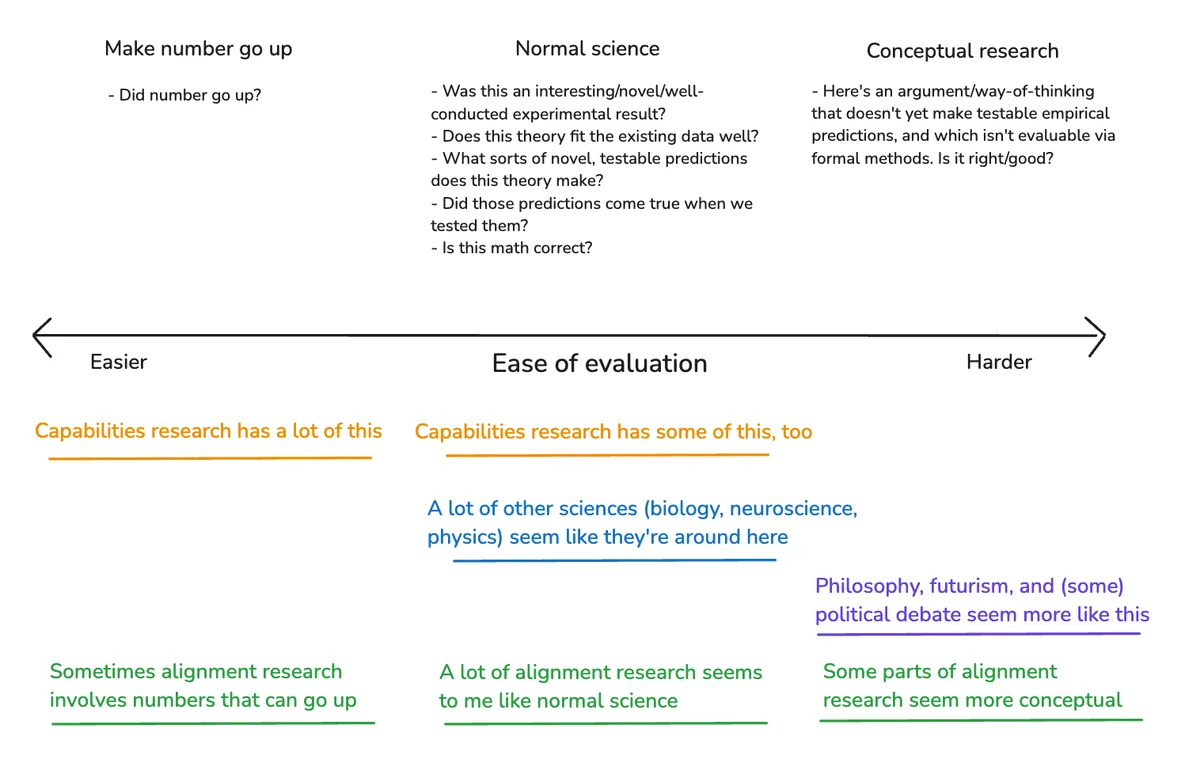
The authors argue that alignment and other important work require especially strong conceptual reasoning — tasks similar to philosophy that are not straightforwardly verifiable and where progress relies on informal a priori argument rather than trained intuitions or experimentation. They call the area neglected and say the AI safety community underinvests in it; the authors themselves have pivoted from doing conceptual research directly to working on differentially accelerating[1] AI's conceptual reasoning, and say their ready-to-go agenda can absorb more people. In their view, many of the most important tasks have indispensable conceptual elements: prioritising AI safety research directions, judging which experiments will be informative in the long run, aligning superintelligence to human values, and modelling risks from misalignment and AGI.
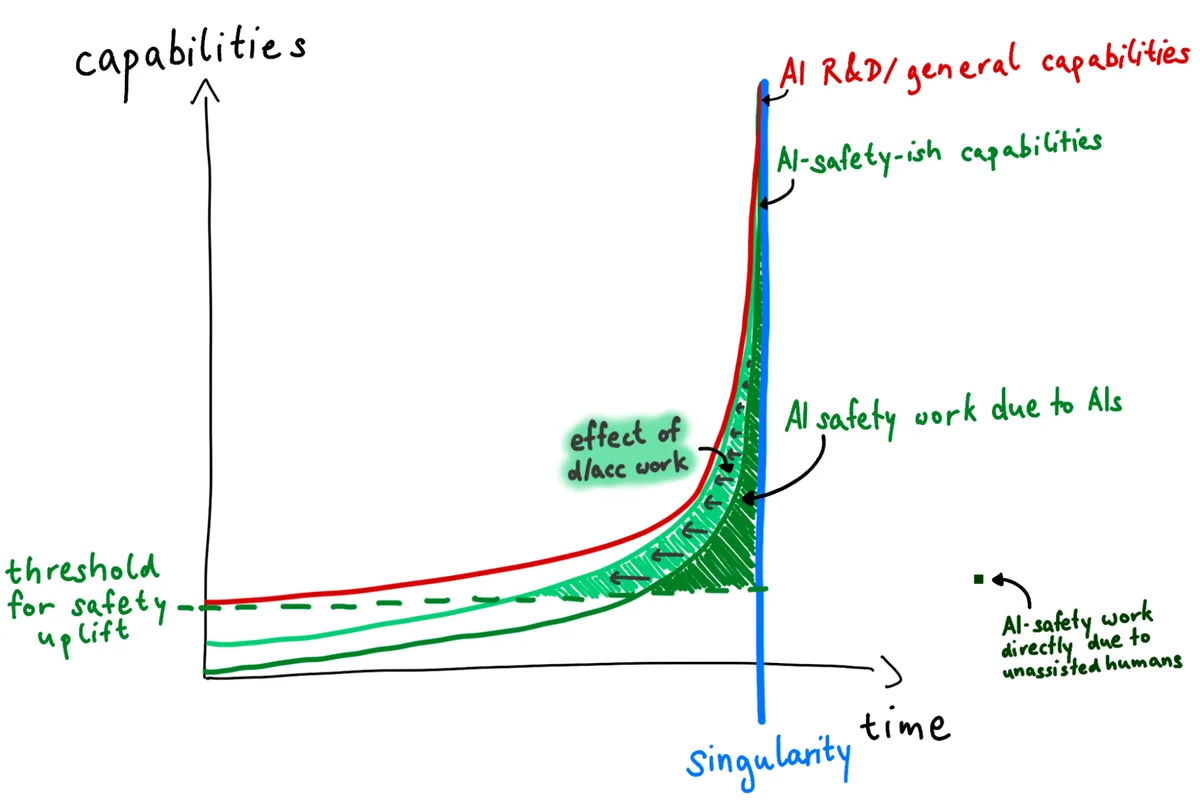
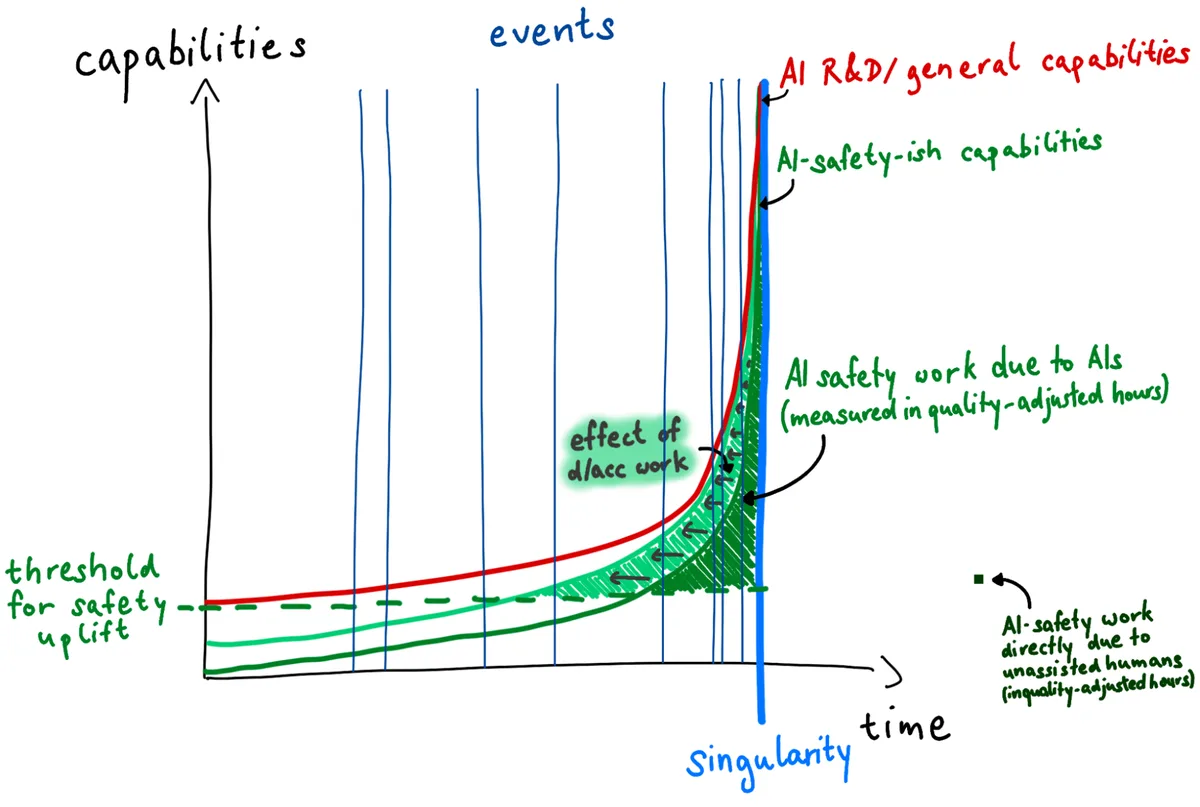
Because AI R&D tasks have fewer and less crucial conceptual components, being closer to verifiable or having verifiable proxies, better conceptual reasoning would differentially help safety work much more than generic capabilities. Takeover[2], meanwhile, seems mostly bottlenecked by non-conceptual skills, though stronger conceptual reasoning might accelerate some takeover-relevant capabilities such as scheming[3]; the authors expect this effect to be smaller than the upsides. They name two paths to impact: how early AI can help with important work, relative to takeoff[4] and the onset of scheming, may be one of the most important determinants of the value of the future, and AI will soon play a very large role in forming the beliefs of future humans and AIs, which matters for path-dependent questions such as decision theory and ethics.
They argue that accelerating conceptual reasoning probably would not happen by default and is tractable: default training will likely generalise poorly to conceptual tasks, because AI companies can get deep into the intelligence explosion by training mainly on easy-to-verify tasks such as finding learning algorithms with greater sample efficiency, and because conceptual reasoning is much less useful for R&D and has few commercial applications. Even where default training instils the underlying capabilities, models will likely fail to display them on conceptual tasks. From their initial work, basic elicitation techniques such as few-shot prompting and small-scale training made models three to twelve months better on their main conceptual reasoning benchmark — roughly as much as several months of frontier AI progress. They also expect only small effects on generic capabilities, for three reasons: improvements that advance AI development timelines are less likely to make a real difference because companies' own training would produce them anyway, generalisation within conceptual reasoning is imperfect enough that one can focus on less risky domains, and generic capabilities are far from neglected, so the downsides of accelerating them matter less than the opportunity costs of not doing this work.
Read the original lesswrong.com
Sources
-
LessWrong
A basic case for differentially accelerating conceptual reasoning capabilities


