Anthropic says Claude Mythos cut AMD GPU onboarding from 6–12 months to about three days
What happened next
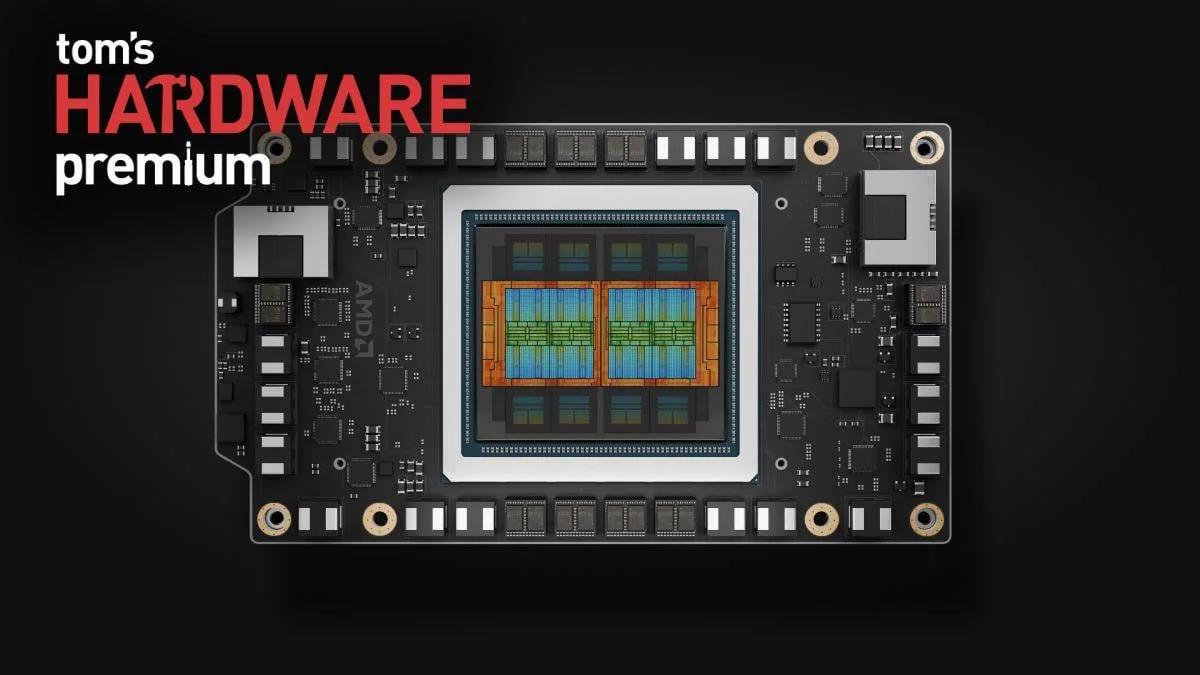
Anthropic told IPO investors that its Claude Mythos Preview model did the software work needed to run one of its AI models on AMD MI355X GPUs in about three days, with "basically no human intervention." The company says this kind of job used to take six to 12 months. According to Anthropic, Mythos ported or wrote "almost 100% of the kernels"[1] for prompt processing, "at a useful level of performance."
Low-level code of this kind ties an AI model to one company's chips, and it has been part of the CUDA[2] barrier that protects Nvidia. Anthropic already runs its models on Nvidia and AMD GPUs, Google TPUs and AWS Trainium, and manages them as "one fungible pool of compute." Tom Brown, Anthropic's co-founder and chief compute officer, said the earlier work needed a team of "dozens of engineers." The company's prospectus also states: "We can onboard new chip platforms in a fraction of the time it once took."
The article notes that Anthropic has not said whether the decode[3] step was included, or how fast the model ran on AMD hardware compared with Nvidia. Nvidia CEO Jensen Huang has said that nobody knows Nvidia's architecture better than Nvidia, and he called Anthropic "a unique instance, not a trend." The article concludes that CUDA's advantage is narrowing but not gone, because new chips still need hardware to test on. Anthropic's first AMD MI450 chips, in Helios racks, are expected in the first half of 2027.
Read the original tomshardware.comDiscussion
Discussion
Most commenters are skeptical. Several say the title and the phrase "at a useful level of performance" are unclear, and one suggests the speed may be barely usable. Others say that in their own work they still have to supervise Claude and check every step.
Sources
-
Tom's Hardware
Anthropic says Claude Mythos slashed software work to onboard AMD GPUs from up to 12 months to around three days —writing almost 100% of kernels autonomously chips away at Nvidia's CUDA moat