AMD EPYC Zen 6 vs. Zen 1: 12.1x Performance Gain in Under 10 Years, Up to 133x in AI
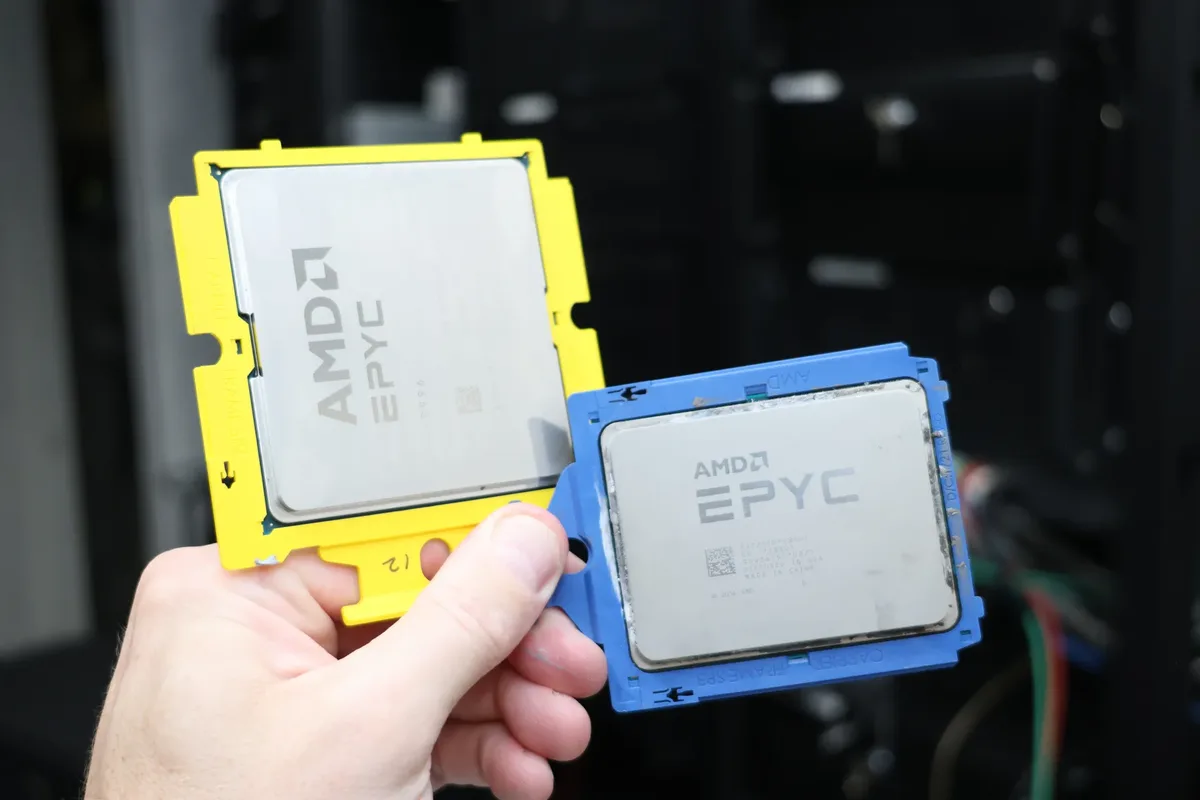
Phoronix compared AMD's new EPYC 9006 "Venice" server processors, which became available in November 2026, with the first-generation flagship, the EPYC 7601 from June 2017. The author tested the EPYC 9996 and EPYC 9686F, both Zen 6 chips, against the EPYC 7601 across real-world workloads and power efficiency.
The EPYC 7601 had 32 Zen 1 cores (64 threads), a 2.2GHz base frequency, a 3.2GHz max boost, 64MB of L3 cache, eight channels of DDR4-2666, 128 PCIe 3.0 lanes and a 180 Watt TDP[1]. The EPYC 9996 has 256 Zen 6C cores (512 threads), a 2.55GHz base clock, a 4.1GHz max boost, 1024MB of L3 cache, 16 channels of DDR5 RDIMM or up to MRDIMM-12800[2] memory, 96 PCIe 6.0 lanes and a 600W default power rating. The EPYC 9686F has 96 Zen 5 cores (192 threads), a 4.05GHz base frequency, up to 5.3GHz max boost, 384MB of L3 cache and a 600 Watt default power rating.
The Zen 1 system was a dual-socket Dell PowerEdge R7425 with two EPYC 7601 processors and 16 x 32GB DDR4-2666 memory. The Zen 6 systems were dual-socket with 32 x 64GB MRDIMM-12800 memory, and all servers ran Ubuntu 26.10 with Linux 7.3 and GCC 15.3. Power was measured with the RAPL sensors[3]. The results showed a 12.1x geo mean gain[4] across real-world workloads, and up to 133x in AI.
AMD shares (AMD)
453.46 USD 0.0% since the news day, November 24
Close on November 23 Quotes: CNBC Chart by TradingView
Read the original phoronix.comDiscussion
Discussion
Commenters split the 12.1x gain into two parts: about 3x from the higher core count, and the remaining roughly 4x from architectural improvements such as AVX-512. Others focused on the cost of building such a server and its 600W power rating, and one said Zen 2 was the more interesting generation compared with Zen 1.
Sources
-
Phoronix
AMD EPYC Zen 6 vs. Zen 1 Performance: 12.1x Geo Mean in Less Than 10 Years
-
KRGeekNews KO
AMD EPYC Zen 6 대 Zen 1 성능 비교: 10년도 안 돼 기하평균 12.1배



 archive