A 10-year-old CNN outperforms frontier LLMs for skin cancer diagnosis
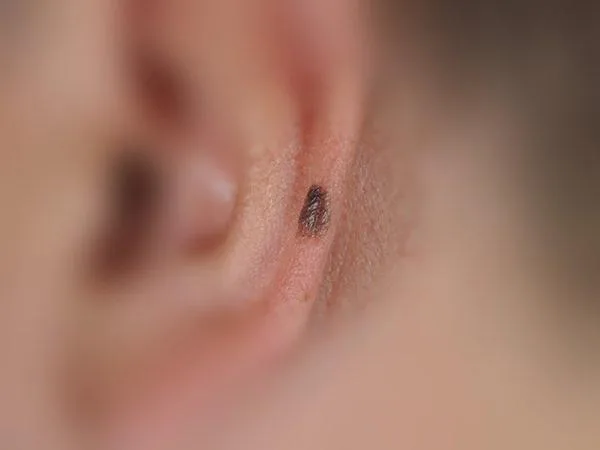
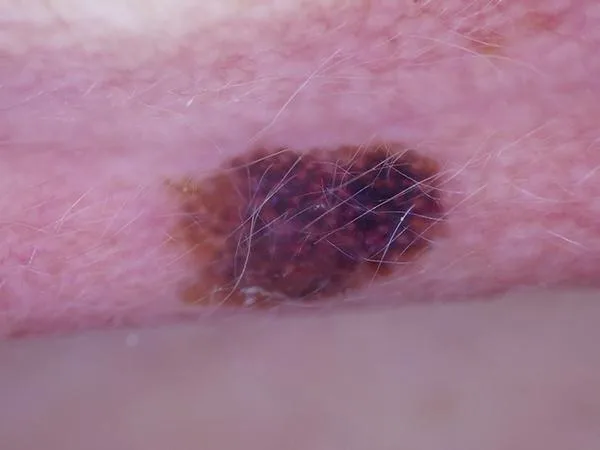
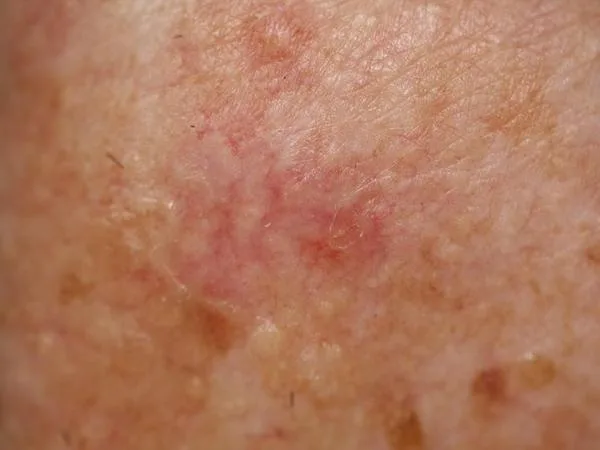
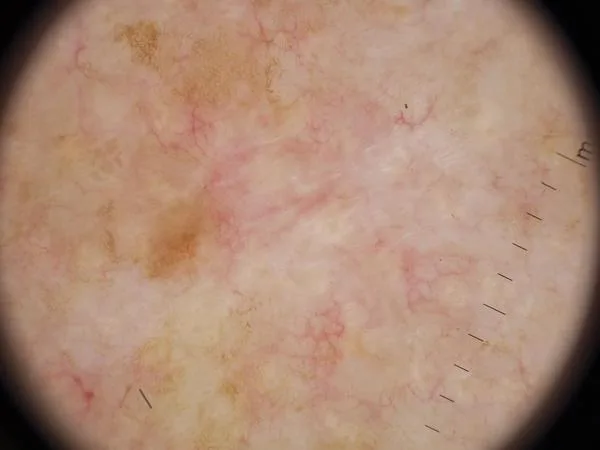
A dermatologist tested two frontier LLMs[1], GPT-6 Astra and Claude Fable 5.1, which the author ranks among the most capable AI models available in October 2026, against Inception v3, a convolutional neural network (CNN)[2] first published by Google in 2015. On 200 biopsy-proven skin lesions with 6 possible diagnoses, the CNN, fine-tuned[3] on public dermatology images, named the right diagnosis for 125 (62%), while the two LLMs managed 84 and 85 (42%). In one example, both LLMs called a melanoma a harmless seborrhoeic keratosis and said the patient could be discharged, while the CNN answered correctly from the dermoscopic[4] image.
The lesions came from MILK10k, a public dataset released through the International Skin Imaging Collaboration in 2025, in which each lesion is photographed twice, as a clinical close-up and a dermoscopic image. The 200 lesions were drawn at random: 30 melanomas, 25 basal cell carcinomas, 25 squamous cell carcinomas, 20 actinic keratoses, 50 benign naevi and 50 seborrhoeic keratoses; every lesion, including the benign ones, had been biopsied, which makes these harder cases. The CNN was fine-tuned for about twenty minutes on 68,011 dermoscopic and clinical images from the ISIC Archive on a single H100 GPU, with the test lesions removed from its data, and is small enough to run entirely in a phone browser using WebGPU.
The models failed differently: GPT-6 Astra called 75 lesions basal cell carcinoma when 25 were, and Claude Fable 5.1 called 53 actinic keratosis when 20 were, while the CNN recognised 13 of 30 melanomas against 8 and 11 for the LLMs. The author notes that 200 lesions are too few to rank close results, that each LLM case was run only once, and that the LLMs could have seen the public dataset during training, which, if anything, would have helped them. Asked as a patient, with the clinical photograph alone, both LLMs advised seeing a doctor in almost every case, harmless lesions included: for 99 and 98 of a further 100 biopsy-proven melanomas. The analysis and first drafts were produced with Claude Code, Anthropic's coding tool, and one of the two LLMs tested is also Anthropic's.
Read the original lynchlab.netDiscussion
Discussion
Commenters mostly read the result as an argument for using LLMs to build dedicated classifiers rather than applying LLMs directly, with one calling this the likely end state of agentic software. Others point out the trade-off that a classifier needs labeled training data while an LLM can start from a prompt alone, and that non-experts may lack the terminology and patience to train and set up a classifier.
Sources
-
lynchlab.net
A 10-year-old CNN outperforms frontier LLMs for skin cancer diagnosis
-
KRGeekNews KO
10년 된 CNN, 피부암 진단에서 최첨단 LLM보다 높은 성능 기록


